

Why is Groundwater in Africa becoming increasingly important? Groundwater in Africa is becoming one of the continent’s most important resources as climate pressures, rapid urbanization, and growing water demand continue to reshape access to safe water. Across many African countries, rivers and surface water systems are becoming increasingly unreliable due to prolonged droughts, changing rainfall patterns, and environmental degradation.
At the same time, populations are growing rapidly. Cities are expanding, agricultural demand is increasing, and millions of people still lack reliable access to clean water. These pressures are forcing communities, institutions, and governments to rely more heavily on groundwater as a dependable source of supply.
Unlike rivers or lakes that are visible and easily monitored, groundwater exists beneath the surface, stored within underground rock formations known as aquifers. Although often overlooked, this hidden resource supports millions of households, farms, schools, hospitals, and industries across the continent.
The growing importance of groundwater in Africa is not only about survival during drought periods. It is increasingly connected to climate resilience, urban sustainability, food security, and long-term development planning.
According to UN agencies, more than 400 million people across Africa still lack access to safe drinking water, increasing pressure on alternative water sources such as groundwater.
Understanding Groundwater and Why It Matters
Groundwater refers to water stored beneath the earth’s surface within soil layers, sand formations, and underground rock systems. These underground reserves are replenished naturally through rainfall infiltration and surface water movement.
One of the reasons groundwater in Africa is so valuable is its relative reliability compared to surface water systems. Groundwater supplies nearly half of Africa’s drinking water and supports millions of people in rural and urban communities across the continent. During dry seasons, rivers may shrink, and reservoirs may decline significantly, yet underground aquifers often continue to provide water for communities and ecosystems.
Groundwater also undergoes natural filtration as it moves through soil and rock layers. This process can improve water quality before extraction, although contamination risks still exist where management systems are weak.
In many parts of Africa, groundwater acts as a silent safety net during periods of environmental stress. Rural communities often depend entirely on boreholes and wells, while urban areas increasingly rely on groundwater to supplement overstretched municipal systems.
Despite its importance, groundwater remains under-discussed in many public conversations about water security.
Millions of Africans Depend on Groundwater Every Day
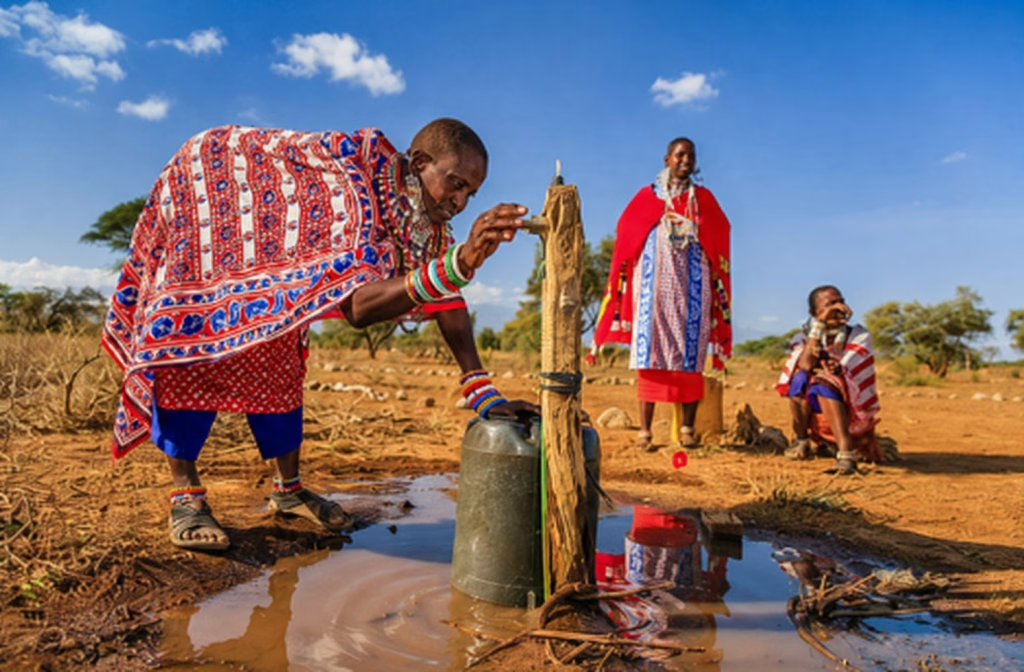
For millions of people across Africa, groundwater is part of daily life even when it is not immediately visible. In rural communities, boreholes and wells often provide the primary source of water for drinking, cooking, farming, and sanitation.
Schools, healthcare facilities, and agricultural systems also depend heavily on underground water sources. In drought-prone areas, groundwater can become the only stable source available during prolonged dry periods.
In Kenya, groundwater use has expanded significantly over recent years. Across counties such as Kajiado, Kiambu, Machakos, and parts of Nairobi, borehole development has increased as communities search for more reliable alternatives to inconsistent municipal supply systems.
The growing dependence on groundwater in Africa demonstrates how essential underground water reserves have become for both urban and rural resilience.
Climate Change Is Increasing Dependence on Groundwater
Climate change is intensifying water insecurity across Africa, and this is increasing reliance on groundwater systems. Longer drought periods, unpredictable rainfall, and declining river flows are reducing the reliability of traditional surface water sources.
In East Africa, repeated drought events have affected rivers, dams, and seasonal water systems that communities have depended on for decades. During these periods, groundwater often becomes the most stable source available.
This growing dependence highlights the connection between groundwater in Africa and climate resilience. Underground water reserves can provide critical support during climate shocks when properly managed and protected.
However, increasing extraction without sustainable planning can also create long-term risks. Climate resilience, therefore, depends not only on access to groundwater but also on responsible management of aquifers and recharge systems.
Africa’s water future will depend not only on what is visible on the surface, but also on how wisely underground resources are managed.
Boreholes Are Reshaping Water Access in Kenyan Cities
Across Kenyan cities, boreholes are increasingly reshaping how households, businesses, and institutions access water. In many urban areas, unreliable municipal supply has encouraged both private and public investment in groundwater extraction.
In neighborhoods across Nairobi, Rongai, Kiambu, and parts of Eastlands, boreholes have become common alternatives during periods of water rationing. Residential estates, schools, hospitals, and apartment developments often depend on underground water systems to maintain consistent supply.
This shift demonstrates both adaptation and vulnerability. On one hand, groundwater provides flexibility and resilience where public systems struggle. On the other hand, rapid and poorly regulated extraction raises concerns about sustainability.
The rise of boreholes also reflects deeper groundwater in Africa challenges linked to urban growth, infrastructure pressure, and unequal access to reliable water systems.
Groundwater Depletion and Over-Extraction Are Growing Risks
Although groundwater can support resilience, unsustainable extraction is becoming a growing concern across many African regions. As more communities, industries, and urban developments rely on boreholes, pressure on underground aquifers continues to increase.
Excessive extraction can lower groundwater levels over time, making wells less productive and increasing pumping costs. In severe cases, aquifer depletion may take years or even decades to recover naturally.
Some urban areas are already experiencing signs of stress linked to overdependence on groundwater systems. Weak regulation, limited monitoring, and unplanned drilling can further worsen these risks.
Key concerns associated with over-extraction include:
- declining water tables
- increased energy costs for pumping
- reduced groundwater recharge
- land degradation and environmental stress
- long-term water insecurity
Protecting groundwater in Africa therefore requires balancing immediate demand with long-term sustainability.
Pollution Threatens Groundwater Quality Across Africa
Groundwater is often perceived as naturally safe, yet contamination risks are increasing across many African regions. Poor waste management, industrial pollution, sewage leakage, and unregulated urban expansion can all affect underground water quality.
In densely populated urban areas, poorly managed sanitation systems increase the risk of contaminants seeping into groundwater reserves. Informal settlements without adequate drainage or sewage infrastructure are particularly vulnerable.
Agricultural chemicals, industrial discharge, and landfill leakage can also affect aquifer systems over time. Once groundwater becomes contaminated, cleanup is often difficult and expensive.
This means that protecting groundwater in Africa is not only about quantity, but also about maintaining water quality and ecosystem health.
Research and Technology Are Improving Groundwater Management
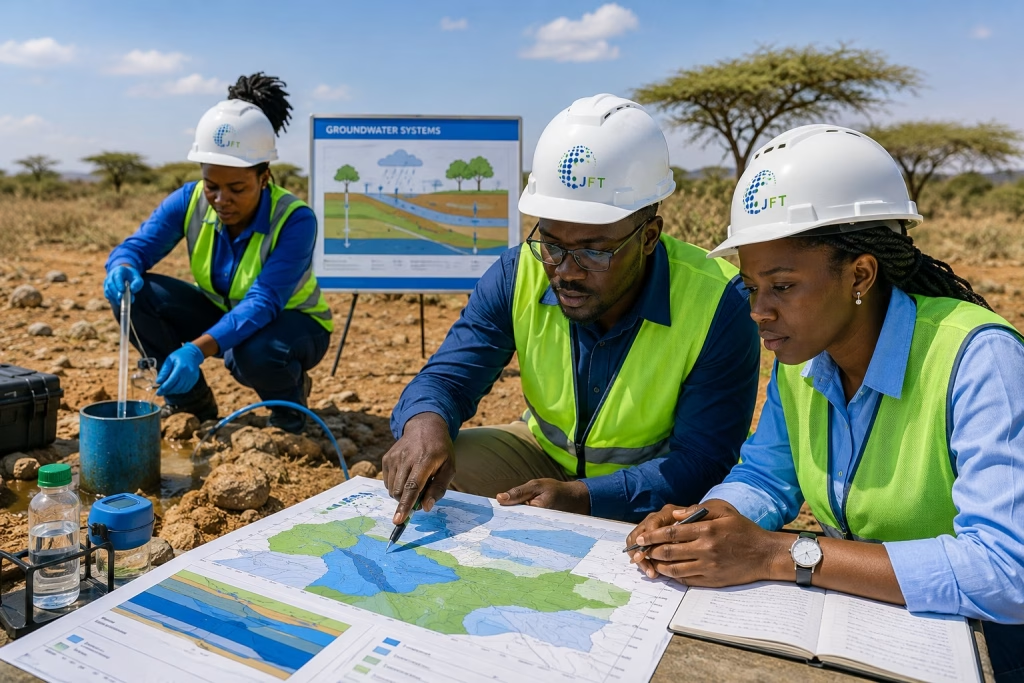
Scientific research and technological innovation are playing an increasingly important role in improving groundwater management across Africa. Hydrogeologists, environmental scientists, and water management experts are using advanced tools to better understand underground water systems and predict future risks.
Technologies such as Geographic Information Systems (GIS), satellite monitoring, groundwater mapping, and digital monitoring systems are helping improve data collection and resource planning.
Research institutions and water organizations are also investing in aquifer mapping and sustainable extraction strategies. Organizations such as the International Water Management Institute continue to support research and innovation focused on water security and sustainable groundwater management.
These advancements are helping strengthen long-term decision-making related to groundwater in Africa.
Strengthening Groundwater Governance in Africa
Effective groundwater management depends heavily on governance, regulation, and long-term planning. Without clear policies and monitoring systems, underground water resources can become vulnerable to overuse, contamination, and unequal access.
Many African countries are now recognizing the need for stronger groundwater governance frameworks that combine science, infrastructure planning, environmental protection, and community participation.
Key priorities include:
- improving groundwater monitoring systems
- regulating borehole development
- protecting aquifer recharge zones
- strengthening water quality management
- investing in scientific research and data systems
Improving governance is essential because sustainable groundwater management directly influences climate resilience, food security, urban development, and public health.
Learn more in our article on urban water security risks in Kenyan cities.
Strategic Outlook on Groundwater in Africa
Groundwater in Africa is becoming increasingly central to the continent’s future resilience. As climate variability intensifies and water demand continues to rise, underground water systems will likely play an even greater role in supporting communities, cities, agriculture, and economic development.
However, the future of groundwater security will depend on how effectively these resources are managed today. Sustainable extraction, scientific research, environmental protection, and stronger governance systems will all be essential in protecting underground water reserves for future generations.
Groundwater may remain largely invisible beneath the surface, but its importance to Africa’s long-term sustainability is becoming impossible to ignore.