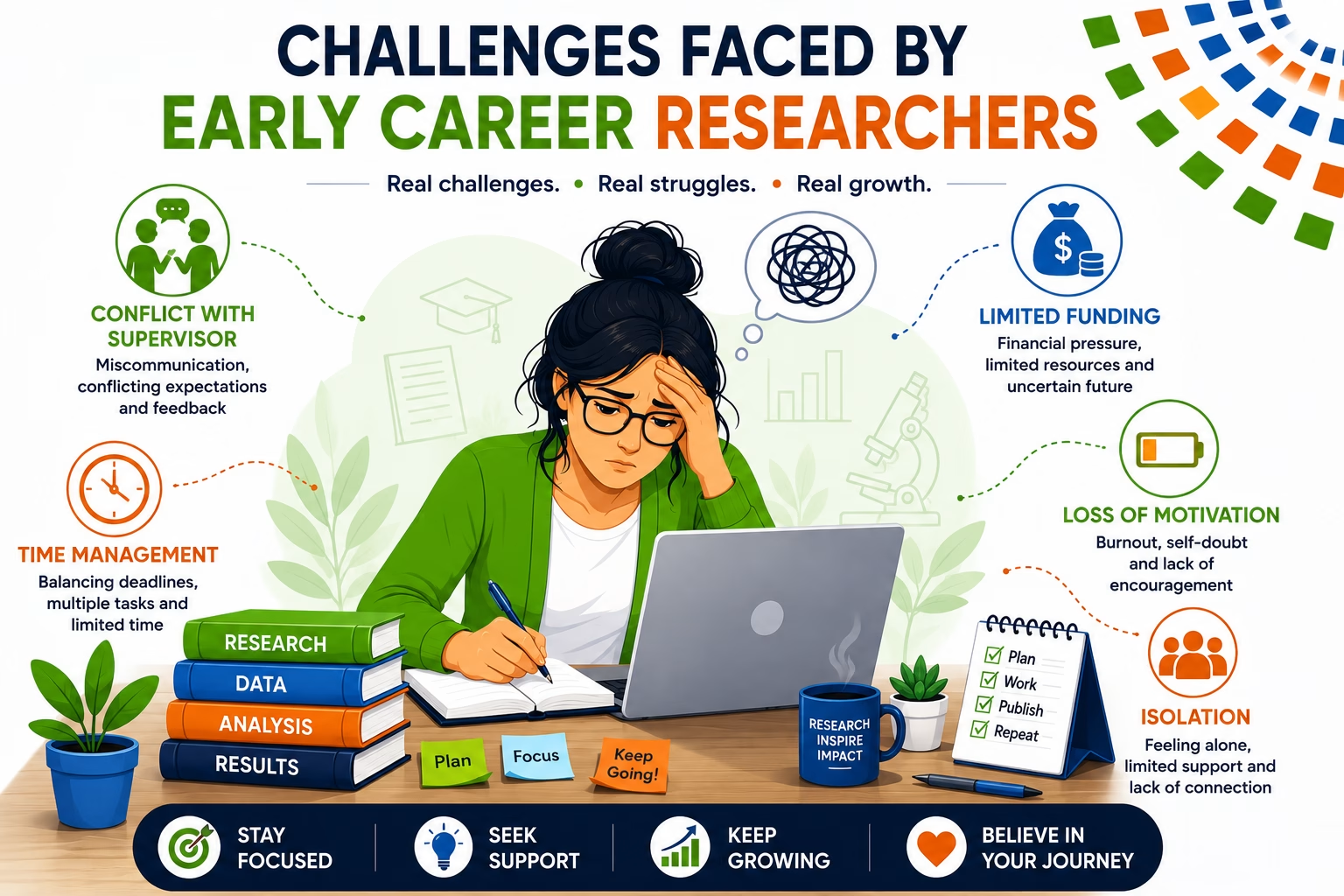

The challenges faced by early career researchers are often underestimated in academia. Research careers are commonly associated with discovery, innovation, and intellectual growth, yet the reality behind the scenes can be far more demanding. For many graduate students, PhD candidates, postdoctoral fellows, and young academics, the research journey is filled with uncertainty, pressure, emotional exhaustion, and constant adjustment.
Becoming a researcher is not simply about conducting experiments, publishing papers, or completing a thesis. It is also about navigating difficult moments that test patience, resilience, discipline, and confidence. Many early career researchers silently struggle with supervisor conflicts, financial pressure, burnout, isolation, and overwhelming workloads while trying to maintain academic excellence.
The transition from student to independent researcher can feel intimidating. One day you are motivated and inspired by your work, and the next day you are questioning your abilities, your progress, and even your future in academia. Unfortunately, many researchers believe they are alone in these experiences.
The truth is that thousands of researchers around the world face similar struggles every day.
Understanding the challenges faced by early career researchers is important not only for surviving academic life but also for building healthier, more supportive research environments. While every research journey is unique, certain difficulties consistently emerge across universities, disciplines, and countries.
This article explores the most common challenges faced by early career researchers, why they occur, and practical ways to overcome them while maintaining motivation and personal wellbeing.
1. Conflict with Supervisors
One of the most emotionally difficult challenges faced by early career researchers is conflict with supervisors. Many students begin their academic journey expecting supervisors to provide encouragement, mentorship, guidance, and support throughout the research process. However, research supervision is often more complex than many anticipate.
A supervisor plays several roles at once — mentor, evaluator, collaborator, critic, and sometimes even gatekeeper to academic progress. Balancing these responsibilities is not always easy, and disagreements can naturally emerge during the course of research.
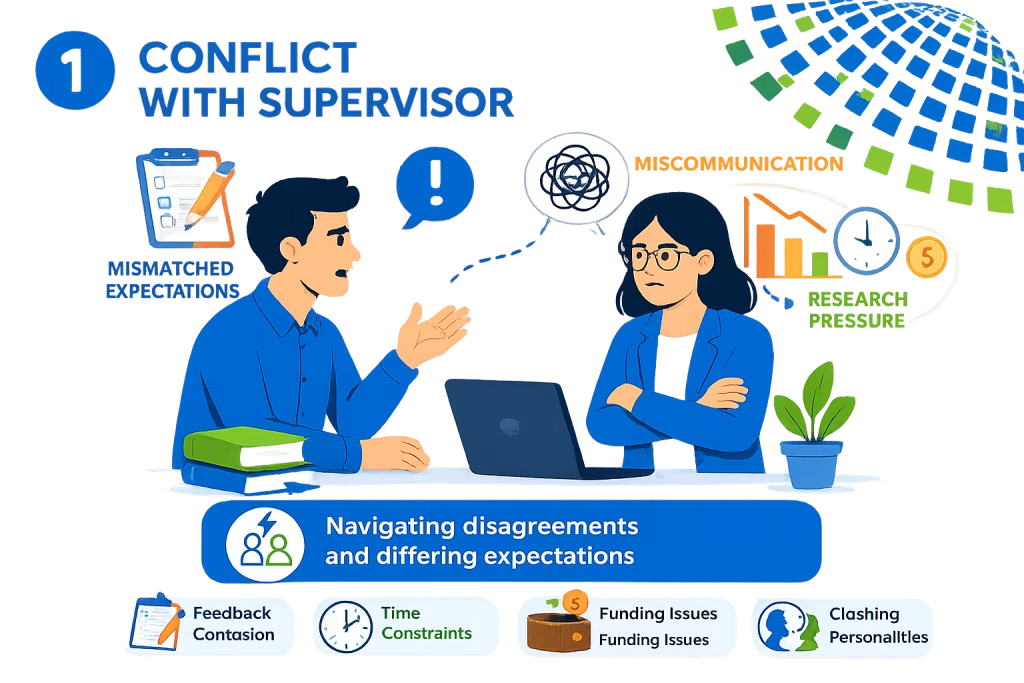
Conflicts commonly arise from:
- Miscommunication and unclear expectations
- Delayed or inconsistent feedback
- Different research visions or academic priorities
- Time pressure and publication expectations
- Funding-related stress
- Personality and communication differences
For many master’s and PhD students, receiving heavily corrected drafts or being asked to completely restructure research objectives can feel discouraging. Imagine spending weeks or months preparing a proposal only to hear that major sections must be rewritten. Such experiences can easily lead to frustration, disappointment, and loss of confidence.
However, disagreement does not necessarily mean failure.
In many cases, academic conflict is part of the intellectual training process. Research is designed to challenge ideas, strengthen critical thinking, and develop independence. Difficult feedback, although uncomfortable, often contributes to academic growth and stronger scientific reasoning.
The key is learning how to manage disagreements professionally without taking every criticism personally.
Building a support network with fellow graduate students can help researchers realise that supervisor conflict is extremely common in academia. Seeking guidance from senior researchers, mentors, or departmental support systems may also provide clarity during difficult periods.
Most importantly, researchers should remember that one difficult interaction does not define their potential or future success.
2. Time Management Challenges Faced by Early Career Researchers
Among the many challenges faced by early career researchers, managing time effectively remains one of the hardest skills to master.
Research rarely follows a predictable schedule. There is always another article to read, another analysis to complete, another deadline approaching, or another revision waiting. Unlike structured classroom learning, research often has no clear boundaries, making it easy for work to consume evenings, weekends, and personal time.

Many early career researchers also balance multiple responsibilities simultaneously, including:
- Coursework and thesis writing
- Teaching or laboratory assistance
- Conferences and workshops
- Consultancy or part-time employment
- Administrative duties
- Family and personal responsibilities
Over time, this constant pressure can lead to exhaustion and reduced productivity. Ironically, trying to do too many things at once often results in accomplishing less.
When the brain becomes overloaded, concentration weakens, motivation decreases, and even simple tasks begin to feel overwhelming.
Effective time management is therefore not about working endlessly. It is about prioritising wisely and protecting mental energy.
Researchers can improve productivity by:
- Setting realistic daily goals
- Breaking large projects into smaller tasks
- Prioritising high-impact activities
- Limiting unnecessary distractions
- Working on one task at a time
- Protecting time for rest and recovery
Learning to say “no” is equally important. Many young researchers feel pressured to accept every opportunity, collaboration, or additional responsibility that comes their way. However, protecting focus and avoiding burnout are essential for long-term academic success.
Research is not a sprint. It is a long-term journey that requires balance and sustainability.
3. Funding Challenges Faced by Early Career Researchers
Financial insecurity is one of the most significant challenges faced by early career researchers, particularly in developing countries where research funding opportunities may be limited.
Research can be extremely expensive. Tuition fees, fieldwork, laboratory analysis, software, conference attendance, accommodation, and daily living costs create major financial pressure for students and young academics.
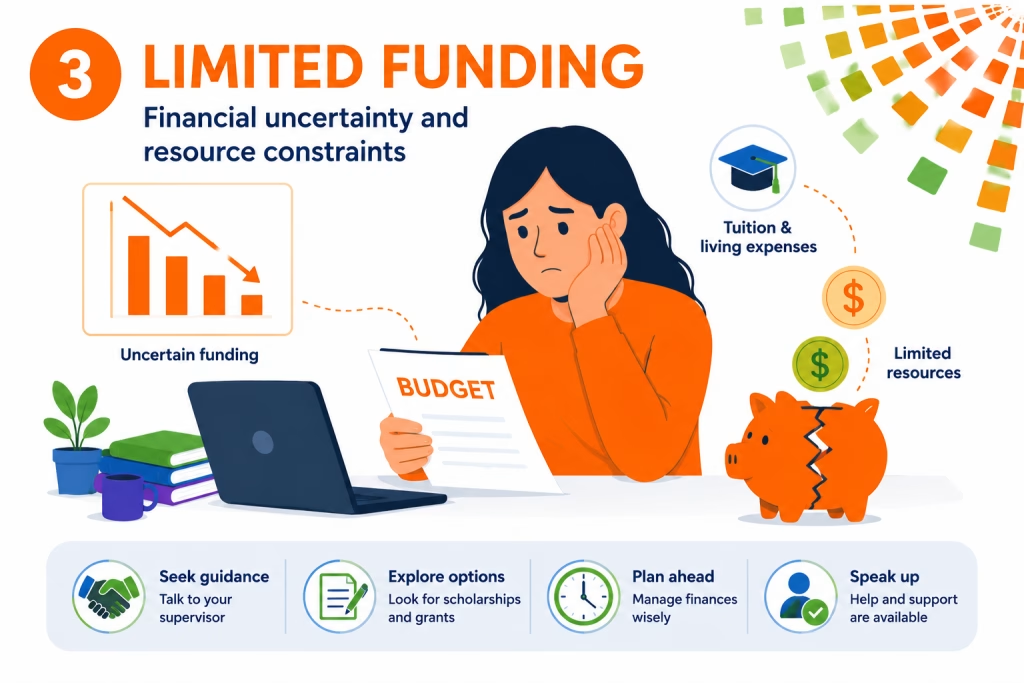
Many researchers depend entirely on scholarships, grants, fellowships, or temporary contracts that may not provide long-term stability. Self-funded students often face even greater challenges as they attempt to balance employment with demanding academic schedules.
Financial stress affects more than personal comfort.
It directly influences research progress, mental wellbeing, productivity, and completion timelines. Some researchers delay important field activities or abandon valuable opportunities simply because funding is unavailable.
In many cases, financial uncertainty also contributes to emotional exhaustion and anxiety.
However, researchers should never underestimate the importance of seeking support early. Supervisors, departments, universities, and research organisations often know about scholarships, grants, emergency support funds, or collaborative opportunities that students may not discover independently.
Speaking openly about financial challenges is not a weakness.
Researchers should also develop basic financial planning habits such as budgeting carefully, prioritising academic expenses, and applying for funding opportunities as early as possible.
Although financial pressure remains one of the most difficult challenges faced by early career researchers, support systems and strategic planning can help reduce the burden significantly.
4. Loss of Motivation
Loss of motivation is another common reality among the challenges faced by early career researchers.
At the beginning of a research project, excitement and curiosity often drive productivity and ambition. However, as months and years pass, many researchers experience periods of frustration, boredom, emotional exhaustion, or disconnection from their work.
This is completely normal.
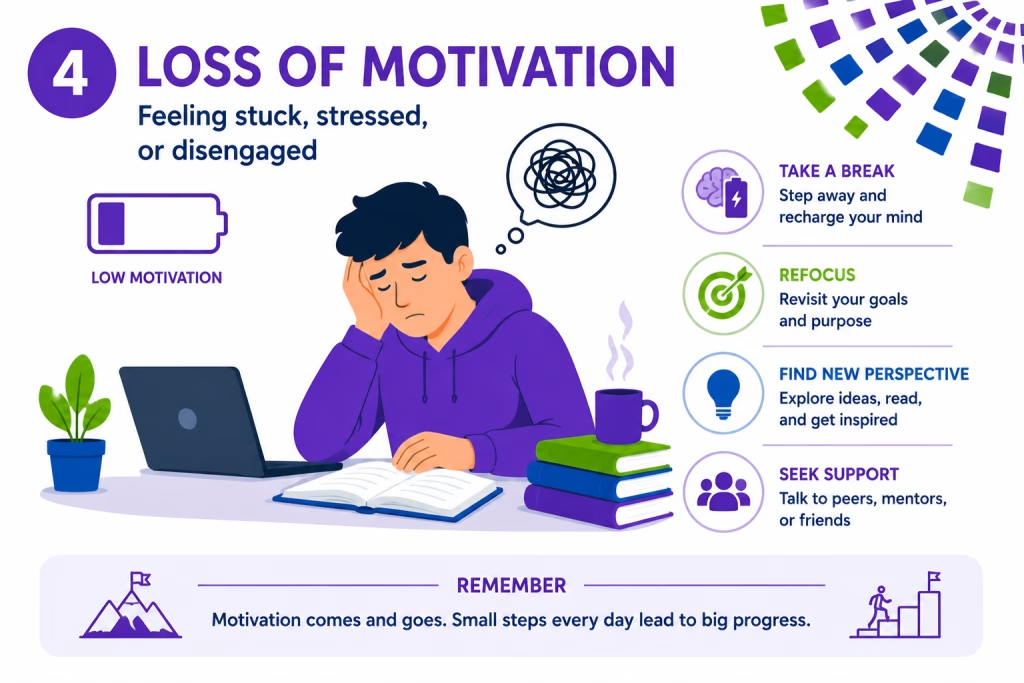
Research involves uncertainty, repeated criticism, delayed progress, failed experiments, rejected papers, and endless revisions. Sometimes researchers work for weeks or months without seeing meaningful results.
Over time, these experiences can slowly drain motivation.
Many young academics mistakenly believe they must remain inspired every day to succeed. In reality, consistency matters far more than constant motivation.
There will be periods when research feels exciting and deeply meaningful. There will also be days when opening a laptop feels emotionally exhausting.
During difficult moments, taking short breaks can be incredibly valuable. Rest allows the brain to recover, reorganise information, and regain focus. Some researchers rediscover motivation through reading new ideas, changing environments, attending conferences, connecting with peers, or revisiting the original purpose behind their work.
Small progress also matters.
Writing one paragraph, analysing one dataset, or reviewing one article may seem insignificant in the moment, but these small steps accumulate into meaningful academic achievements over time.
5. Isolation Challenges Faced by Early Career Researchers
Isolation remains one of the most overlooked challenges faced by early career researchers.
Research can be surprisingly lonely. Many researchers spend long hours working independently with minimal social interaction. Reading, coding, data analysis, laboratory work, and thesis writing often happen in isolation.
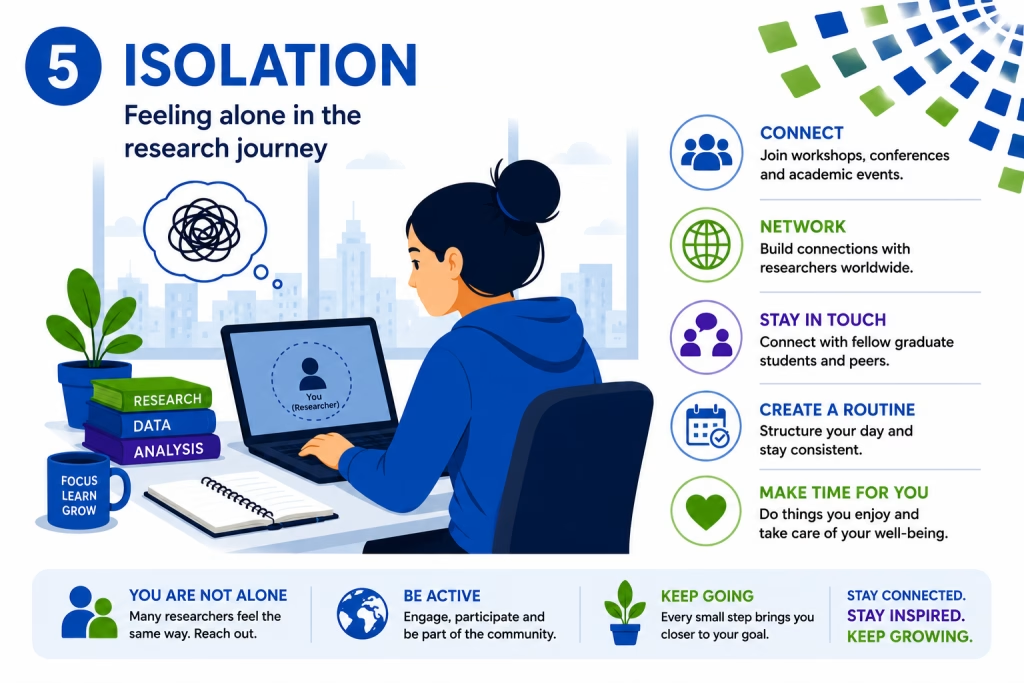
For researchers working in small departments or specialised fields, this loneliness can become even more intense.
Over time, isolation may affect mental wellbeing, confidence, creativity, and motivation. Some researchers begin feeling that nobody understands their struggles or academic pressures.
Ironically, many brilliant researchers silently experience loneliness throughout their academic journey.
The COVID-19 pandemic amplified these experiences globally, increasing remote work and reducing opportunities for physical collaboration and academic interaction.
Overcoming isolation requires intentional effort.
Early career researchers should actively seek opportunities to connect with others through:
- Conferences and academic workshops
- Graduate student communities
- Professional mentorship programmes
- Research seminars and webinars
- Collaborative projects and networking events
- Informal peer support systems
Maintaining hobbies, exercise routines, and social activities outside academia is equally important. Researchers are human beings first — not machines designed only to produce publications and reports.
Strong social support systems can significantly improve both personal wellbeing and academic performance.
Feeling overwhelmed by the challenges of research life? You do not have to navigate the journey alone. At JFT Academy, our mentorship programmes are designed to support early career researchers through guidance, motivation, professional growth, and real-world academic insights. Whether you are struggling with supervision, motivation, time management, or research direction, mentorship can help you move forward with clarity and confidence.
What to Remember as An ECR
Behind every successful researcher is usually a story filled with uncertainty, setbacks, resilience, and persistence.
The academic journey is not always glamorous. It can be emotionally exhausting, financially stressful, intellectually demanding, and deeply isolating. Yet these experiences also shape stronger, more independent, and more resilient researchers.
The important thing is to recognise that struggling does not mean you are failing.
Many accomplished researchers once questioned themselves, battled burnout, faced rejection, or considered giving up entirely. What often separates those who continue from those who stop is not perfection, but persistence.
Understanding the challenges faced by early career researchers is essential for creating healthier academic environments and supporting the next generation of scholars, scientists, and innovators.
If you are currently facing these challenges, remember this:
You are not alone.
Every challenge you overcome is helping shape the researcher — and person — you are becoming.