

Groundwater depletion in Africa is becoming an increasingly important concern as many cities rely heavily on underground water resources for daily survival. Beneath many African cities lies a resource that millions of people depend on every day but rarely think about. Hidden underground, vast groundwater reserves quietly supply homes, hospitals, schools, industries, and businesses with water. In many cities, groundwater has become the invisible foundation of urban life.
Yet this critical resource is facing increasing pressure. Across the continent, rapid urbanization, climate change, population growth, and rising water demand are accelerating concerns about groundwater depletion in Africa. While floods, droughts, and water shortages often make headlines, the gradual decline of underground water reserves receives far less attention.
The challenge is that groundwater depletion happens slowly. Unlike a flood or drought, it is not immediately visible. Water continues flowing from taps and boreholes until one day communities begin to notice declining yields, rising pumping costs, and increasing water shortages. By the time the problem becomes obvious, reversing the damage can be difficult and expensive.
As African cities continue to grow, an important question is emerging: What happens if the groundwater systems supporting millions of people begin to run out?
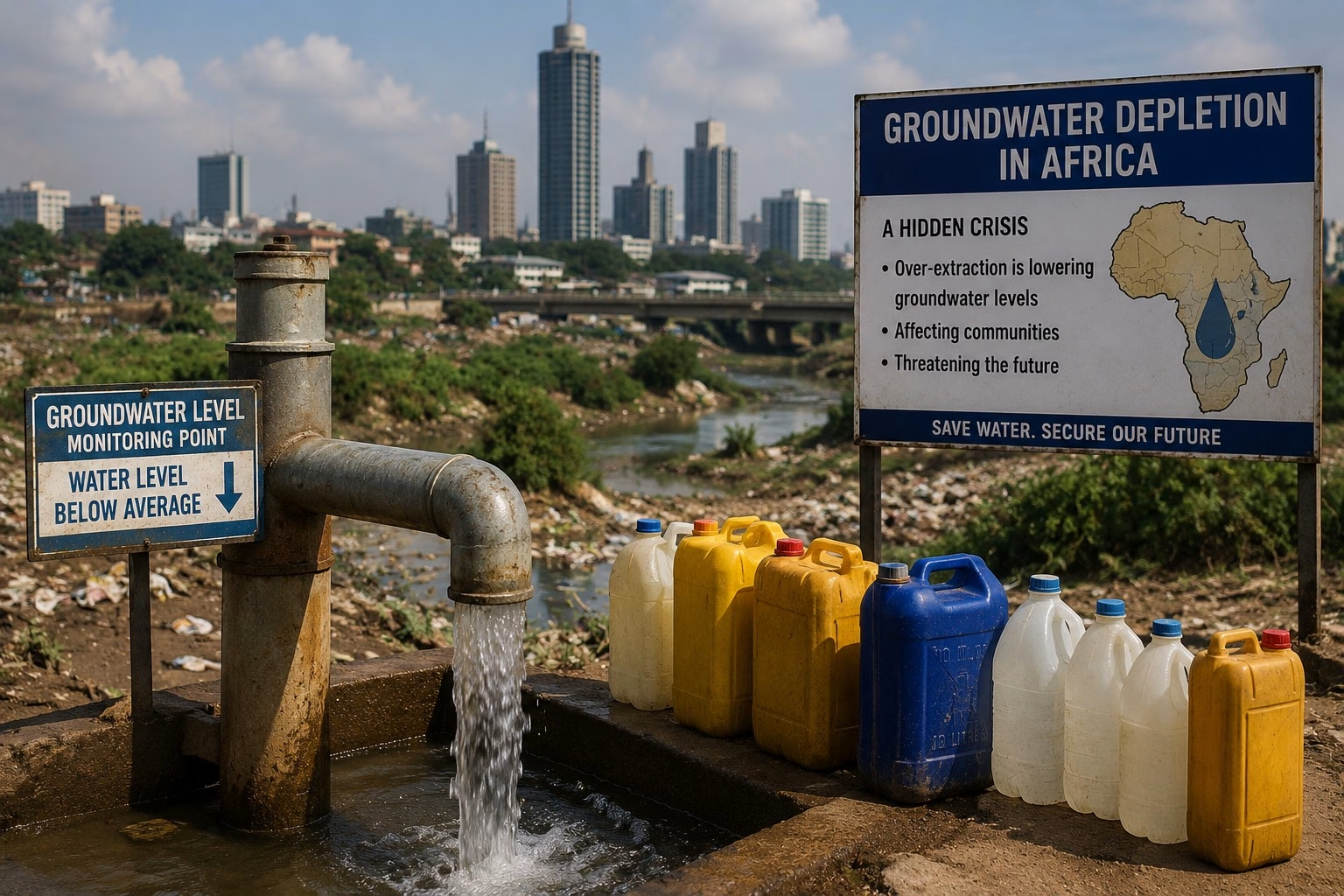
Understanding Groundwater and Why It Matters
Groundwater is water stored beneath the earth’s surface in underground layers of rock, sand, and soil known as aquifers. These aquifers act as natural reservoirs, storing water that accumulates over years, decades, or even centuries through rainfall and natural recharge processes.
Across Africa, groundwater plays a critical role in water security, which is why groundwater depletion in Africa is becoming a growing concern for researchers, policymakers, and urban planners. According to international water research organizations, groundwater provides a significant share of drinking water across the continent and supports agriculture, industry, and urban development.
Many African cities increasingly depend on boreholes to supplement municipal water systems. In areas where piped water is unreliable, groundwater often serves as the primary source of water for households and businesses.
The growing importance of groundwater means that groundwater depletion in Africa is no longer just an environmental concern. It is becoming a major development and resilience challenge.
Why Groundwater Depletion in Africa Is Becoming a Growing Concern
Several factors are driving increasing pressure on underground water reserves across the continent.
Population growth remains one of the most significant challenges. Africa’s population is expected to continue expanding rapidly over the coming decades, increasing demand for water in both urban and rural areas.
At the same time, climate change is reducing the reliability of many traditional surface water sources. Rivers, reservoirs, and seasonal streams are becoming more vulnerable to prolonged droughts and changing rainfall patterns.
As a result, many communities are turning to groundwater as a more dependable alternative.
Key drivers of groundwater depletion in Africa include:
- rapid urbanization
- increasing water demand
- prolonged droughts
- expansion of private boreholes
- weak groundwater regulation
- limited monitoring systems
- industrial and agricultural water use
These pressures are placing growing stress on aquifers that often recharge much more slowly than water is being extracted.
Nairobi Offers an Important Warning Sign
Nairobi provides a useful example of how groundwater dependence can increase over time. As the city’s population has expanded, demand for water has continued to rise.
Water rationing remains common in many neighborhoods, encouraging households, schools, hospitals, and businesses to invest in private boreholes. In areas such as Karen, Ruaka, Kiambu, Rongai, and parts of Eastlands, groundwater extraction has become increasingly important for maintaining reliable water supply.
While groundwater helps bridge supply gaps, experts have raised concerns about long-term sustainability if extraction exceeds natural recharge rates. Nairobi’s experience reflects a broader pattern of groundwater depletion in Africa, where urban expansion and rising water demand are increasing pressure on underground aquifers.
Nairobi’s experience demonstrates how groundwater depletion in Africa can gradually unfold when urban growth outpaces investment in water infrastructure.
What Happens When Groundwater Levels Begin to Decline?
The effects of groundwater depletion are often gradual but significant.
Initially, communities may notice little change. Over time, however, declining groundwater levels can create multiple challenges that affect both water access and economic development.
Potential consequences include:
- boreholes producing less water
- increased pumping costs
- deeper drilling requirements
- reduced water quality
- greater vulnerability during droughts
- increased competition for water resources
For low-income communities, these impacts can be particularly severe because alternatives are often limited or expensive.
In rapidly growing cities, declining groundwater levels can also increase pressure on already strained municipal water systems.
Climate Change Is Accelerating Groundwater Risks
Climate change is making groundwater management more complex across Africa.
Longer drought periods reduce surface water availability, increasing dependence on groundwater. At the same time, changing rainfall patterns can affect how quickly aquifers recharge.
In the Horn of Africa, repeated droughts have affected millions of people over recent years, forcing communities to rely more heavily on underground water reserves.
This creates a difficult cycle:
- drought increases groundwater use
- groundwater levels decline
- recharge becomes slower
- future drought resilience weakens
The relationship between climate change and groundwater depletion in Africa highlights the need for long-term planning rather than short-term emergency responses.
Climate scientists increasingly warn that groundwater depletion in Africa may accelerate in regions experiencing longer droughts and more unpredictable rainfall patterns.
The Hidden Economic Cost of Groundwater Depletion
Groundwater depletion is not only a water issue. It is also an economic issue.
When groundwater levels fall, households, businesses, and institutions often face higher operational costs. Deeper boreholes require more energy for pumping, maintenance costs increase, and infrastructure investments become more expensive.
Industries that depend on reliable water supplies may also face increased risks.
Economic impacts can include:
- higher water costs
- increased infrastructure expenses
- reduced agricultural productivity
- business disruptions
- declining investment confidence
For growing African cities, these costs can become significant over time.
Groundwater is often called Africa’s hidden resource, but its true value lies in the stability it provides. When underground water systems decline, the consequences extend far beyond water supply and affect public health, economic growth, urban resilience, and long-term sustainability.
Beyond environmental impacts, groundwater depletion in Africa can affect economic productivity, public health, infrastructure investment, and long-term urban development.
How Technology Is Helping Protect Groundwater Resources
Fortunately, advances in science and technology are improving groundwater management across Africa.
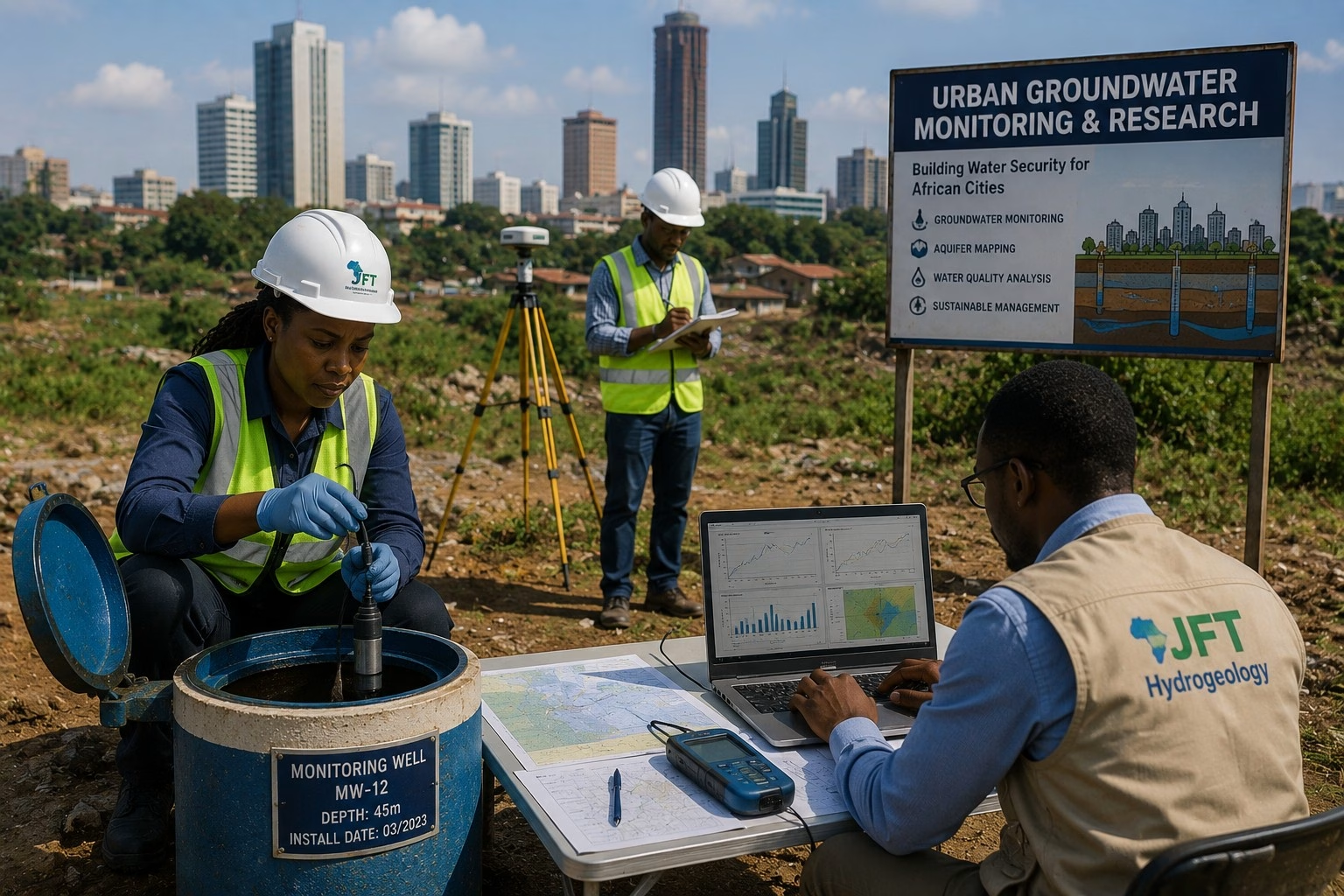
Modern tools now allow researchers and water managers to better understand underground water systems and identify risks before they become crises.
Technologies supporting groundwater management include:
- Geographic Information Systems (GIS)
- groundwater mapping
- satellite monitoring
- remote sensing
- artificial intelligence
- digital monitoring systems
These tools help scientists track aquifer conditions, monitor extraction rates, identify recharge zones, and improve planning decisions.
The growing use of technology demonstrates how research and innovation can help address groundwater depletion in Africa before it becomes irreversible.
Learn more in our article on Geoscience Innovation in Africa: The Powerful Future of Research and Climate Resilience.
What Can African Cities Do to Prevent a Groundwater Crisis?
Preventing future groundwater shortages will require coordinated action from governments, researchers, urban planners, industries, and communities.
The challenge of groundwater depletion in Africa is particularly significant because many cities are becoming increasingly dependent on underground water reserves as surface water sources face growing pressure from climate change and population growth.
Important strategies include:
- strengthening groundwater monitoring systems
- regulating borehole development
- protecting groundwater recharge zones
- investing in water infrastructure
- promoting rainwater harvesting
- improving public awareness
- integrating groundwater into urban planning
Cities that act early will be better positioned to maintain long-term water security and climate resilience.
Organizations such as the World Bank Water Global Practice continue to emphasize the importance of sustainable groundwater management for future development.
Why the Future of African Cities Depends on What Lies Underground
The future of many African cities may depend as much on what lies beneath the ground as what is built above it. As populations grow and climate pressures intensify, groundwater will remain one of the continent’s most valuable resources.
However, groundwater depletion in Africa is a warning that this resource cannot be taken for granted. The challenge is not simply finding more water, but managing existing resources more sustainably and intelligently.
The cities that invest in groundwater protection, scientific research, climate resilience, and long-term planning today will be far better prepared for tomorrow’s water challenges. What happens beneath African cities may ultimately determine how resilient, sustainable, and prosperous they become in the future.