
Building a personal brand and a successful career is no longer only about having the right qualifications and waiting for someone to notice you. In today’s competitive professional environment, personal branding can influence how people perceive your expertise, remember your work, and decide whether to recommend you for an opportunity.
Your degree may tell people what you studied, and your CV may show where you have worked, but your personal brand tells a much bigger story. It communicates what you are good at, what you care about, what you have achieved, and the kind of professional you are becoming.
For students, graduates, researchers, entrepreneurs, and experienced professionals, personal branding can create opportunities that may not come through traditional job applications alone. A strong professional identity can lead to research collaborations, speaking invitations, mentorship opportunities, job referrals, leadership positions, consultancy work, and professional networks.
The important thing is that personal branding is not about pretending to be someone you are not. It is about making your genuine skills, knowledge, experience, and professional interests visible to the people who need them.
What Is Personal Branding?
Personal branding is the intentional, strategic practice of defining and expressing your value.
Personal branding is the intentional process of developing and communicating your professional identity so that people understand who you are, what you know, what you can offer, and what you want to be known for.
Think about professionals whose names immediately make you think about a particular subject.
Perhaps you know someone who is associated with environmental research, another person known for leadership, and another who has built a reputation in technology or entrepreneurship.
That association did not happen by accident.
It was built through their work, communication, expertise, relationships, and consistency.
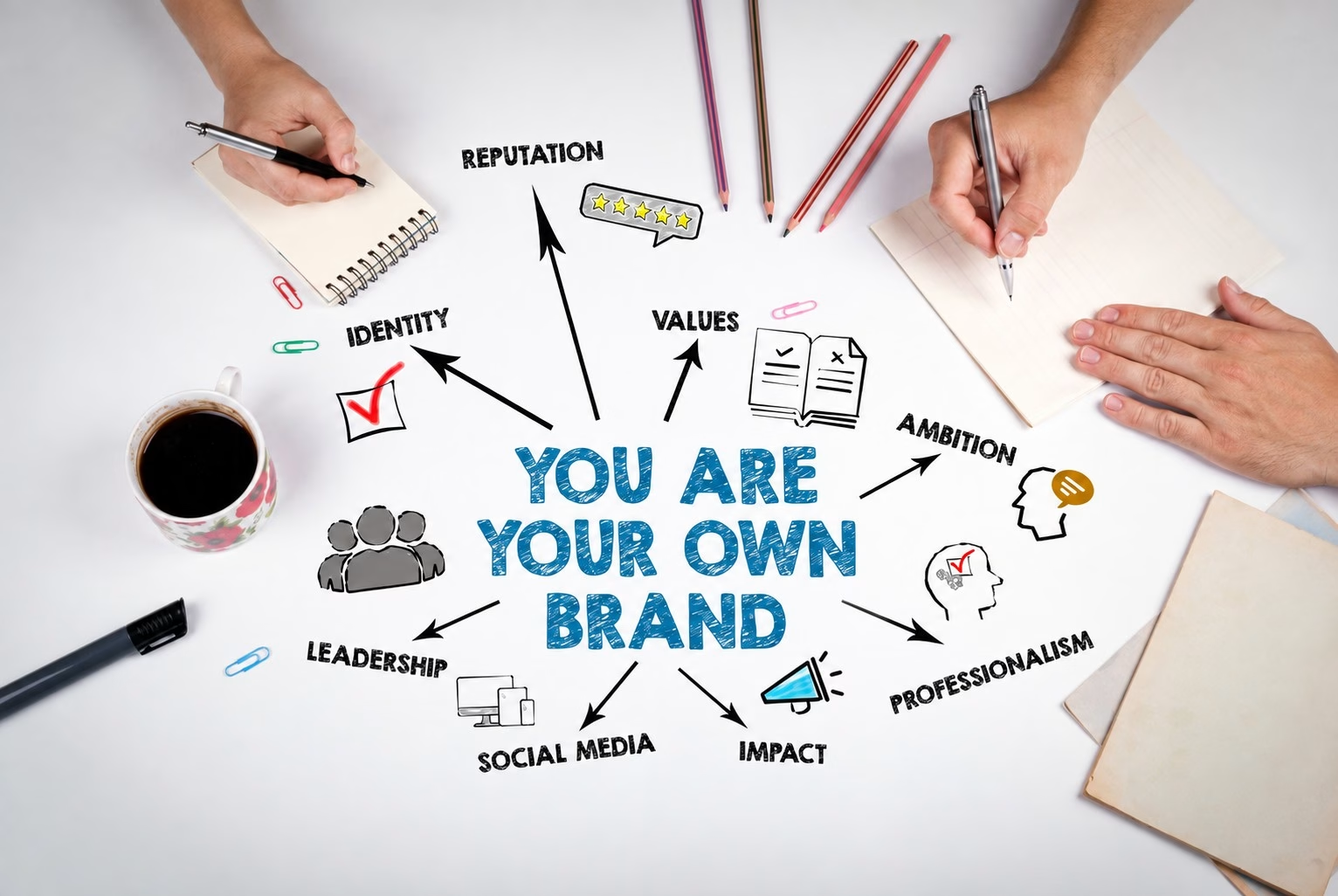
Your personal brand is influenced by:
- Your knowledge and expertise
- Your professional experience
- The problems you solve
- The skills you demonstrate
- The topics you discuss
- Your professional relationships
- Your online presence
- Your values
- The quality of your work
This is why personal branding is much bigger than creating a LinkedIn profile or posting motivational messages on social media.
It is about creating a professional identity that people can recognize and trust.
Why Personal Branding Matters for Career Growth
A strong personal brand can make it easier for opportunities to find you.
Consider two graduates applying for the same research opportunity. Both have relevant degrees and similar academic qualifications.
However, one has also written articles related to their field, participated in professional discussions, attended conferences, contributed to projects, and developed a visible professional profile.
When someone searches for that person’s name online, they find evidence of their interests and expertise.
The other candidate may be equally capable but has very little professional information available online.
The difference may not be ability.
It may simply be professional visibility.
This is where personal branding becomes important.
A strong professional reputation can support:
- Career advancement
- Job opportunities
- Professional networking
- Research collaborations
- Leadership opportunities
- Speaking engagements
- Consultancy opportunities
- Mentorship relationships
- Business opportunities
This means personal branding should not be treated as a social media trend. It should be viewed as part of long-term career development.
Start With What You Want to Be Known For
One of the biggest mistakes people make when developing a personal branding strategy is trying to talk about everything.
You may be interested in technology, business, climate change, finance, research, leadership, entrepreneurship, education, and several other areas. There is nothing wrong with having multiple interests.
However, if people cannot understand what you actually do, it becomes difficult for them to remember you.
Ask yourself:
What do I want people to associate with my name?
For example, an early-career environmental scientist might want to become known for:
- Groundwater management
- Climate resilience
- Environmental monitoring
- Water security
A young data professional might focus on:
- Data analysis
- Business intelligence
- Digital transformation
- Research
A researcher might build a professional identity around a specific research area or problem they want to help solve.
Your answer does not have to define your entire life. It simply gives your personal branding efforts a clear direction
Identify the Skills and Knowledge You Can Offer
You do not have to be the leading expert in your field before you begin building your professional reputation. You can build your brand while you are still learning.
Start by creating three simple lists:
What I know:
The knowledge and skills you already possess.
What I am learning:
The areas you are currently developing.
What I want to become known for:
The professional direction you want to pursue.
This approach makes personal branding more authentic.
For example, an early-career researcher could describe their professional direction as:
“I am an early-career researcher interested in groundwater systems, climate resilience, and technology for sustainable water management.”
That statement tells people what the person is interested in without pretending to have decades of experience.
Your personal brand should grow alongside your career.
Build a Professional Online Presence
Your online presence has become an important part of your professional identity.
When someone hears your name and searches for you online, what do they find?
Your professional presence may include:
- A professional website
- Research profiles
- Academic publications
- Conference profiles
- Professional social media accounts
- Portfolio websites
- Articles and publications
You do not need to be active everywhere.
In fact, trying to maintain several platforms can become exhausting and inconsistent. It is often better to choose one or two platforms where the people relevant to your career are already active.
For many professionals, LinkedIn is a particularly useful starting point for personal branding because it combines professional networking, career development, and industry conversations.
Your profile should make it easy for someone to understand:
- Who you are
- What you do
- What you specialize in
- What you are interested in
- What experience you have
- Where you want your career to go
Your online profile should tell a consistent professional story rather than simply copying information from your CV.
Share What You Know
One of the most effective ways to strengthen personal branding is to share useful knowledge.
You do not need thousands of followers.
Start with what you already know or what you are currently learning.
You could share:
- Lessons from a research project
- A useful professional book
- An industry development
- A challenge affecting your profession
- A useful digital tool
- A conference you attended
- Research findings
- Career lessons
- Professional experiences
- Practical advice for people entering your field
When you consistently share useful information, people begin associating your name with particular subjects.
This can gradually develop into thought leadership.
Thought leadership does not mean claiming to know everything. It means contributing useful ideas, experiences, perspectives, and knowledge to conversations within your field.
For an early-career professional, simply sharing thoughtful observations and lessons can be a powerful beginning to personal branding.
Let Your Work Speak for You
One of the strongest forms of personal branding is evidence.
Instead of repeatedly telling people that you are hardworking, analytical, creative, innovative, or knowledgeable, show them what you have actually done.
Build evidence through:
- Research papers
- Projects
- Presentations
- Articles
- Reports
- Case studies
- Data analysis projects
- Professional certifications
- Community initiatives
- Volunteer work
- Conference presentations
For researchers, publications and presentations can demonstrate expertise.
For digital professionals, a portfolio can demonstrate practical skills.
For consultants and entrepreneurs, case studies can demonstrate results.
The more evidence you have, the stronger your professional reputation becomes.
Your personal brand becomes much more credible when your claims are supported by real work.
Network With Intention
Personal branding and professional networking work closely together.
You can have an excellent online profile, but many career opportunities still emerge through relationships.
Networking, however, should not be about collecting hundreds of contacts.
Focus on building genuine professional relationships.
Attend conferences. Join professional associations. Participate in discussions. Speak to people working in your field. Ask thoughtful questions. Share useful information. Offer support when you can.
Most importantly, maintain relationships after the first interaction.
A simple message such as:
“It was great meeting you at the conference. I found our discussion about environmental monitoring particularly interesting.”
can keep a professional relationship active.
Over time, professional relationships can develop into collaborations, mentorships, referrals, and new career opportunities.
Be Consistent With Your Professional Identity
A successful personal branding strategy requires consistency.
Imagine that your LinkedIn profile describes you as an environmental researcher, your website describes you as a business consultant, and your social media profiles present you as something completely different.
People may struggle to understand your professional direction.
Consistency does not mean you cannot have multiple interests. It means there should be a clear connection between the different parts of your professional identity.
Consistency applies to:
- Your profile descriptions
- The topics you discuss
- Your professional photographs
- Your writing
- Your values
- Your portfolio
- Your communication style
- The work you showcase
When people repeatedly see the same themes associated with your name, recognition develops.
Recognition creates familiarity.
Familiarity, combined with competence and integrity, builds trust.
Don’t Try to Look Perfect
One of the biggest problems with modern personal branding is the pressure to appear successful all the time.
Professional growth is rarely perfect.
People experience rejected applications, failed projects, difficult assignments, career changes, mistakes, and periods of uncertainty.
You do not need to hide every challenge.
Instead, when appropriate, you can share the lessons you gained from those experiences.
For example:
“One lesson I learned from my first research project was that technical knowledge alone is not enough. Communication and collaboration can determine whether good research creates meaningful impact.”
That kind of reflection can make your professional communication more authentic.
The goal is not to expose every part of your personal life. It is to share experiences that provide meaningful professional lessons.
Authenticity is one of the most valuable assets in personal branding.
Personal Branding Is Not About Becoming an Influencer
You do not need thousands of followers to build a successful personal brand.
You do not even need to become a social media influencer.
This distinction is important.
The goal of personal branding is not simply to attract attention. It is to become visible to the right people.
For a researcher, the right audience might include:
- Universities
- Research institutions
- Scientists
- Policy organizations
- Funding organizations
- Potential collaborators
For a young professional, the relevant audience might include:
- Employers
- Recruiters
- Industry professionals
- Potential mentors
- Professional associations
A small but relevant professional network can be far more valuable than thousands of followers who have no connection to your career goals.
Use Mentorship to Strengthen Your Personal Brand
Mentorship can play an important role in developing a professional identity.
A good mentor can help you understand how others perceive your strengths, identify areas for development, and recognize opportunities that may not be obvious to you.
A mentor can help you identify:
- Your strongest professional skills
- Areas where you need improvement
- Opportunities to increase your visibility
- Professional communities worth joining
- Projects that could strengthen your experience
- Ways to communicate your expertise more effectively
This is why personal branding and mentorship complement each other.
A mentor can provide perspective, while you remain responsible for building and demonstrating your professional identity.
For more guidance, explore Mentorship and Career Growth: Why Success Is Rarely a Solo Journey.
Your personal brand is not what you say about yourself. It is the professional reputation you build through what you know, what you do, and how consistently you create value for others.
Common Personal Branding Mistakes to Avoid
Building a professional reputation takes time, but certain mistakes can make the process much harder.
Being Too Generic
Statements such as “I am passionate about success” or “I am a hardworking professional” do not tell people much.
Be specific about your skills, interests, experience, and professional direction.
Copying Other Professionals
It is useful to learn from people you admire, but do not copy their personality, writing style, or career story.
Your experience is different.
Your personal brand should reflect that.
Posting Without Purpose
You do not need to publish something every day.
Quality matters more than constant activity.
Ask yourself whether what you are sharing is useful, relevant, or meaningful to your professional audience.
Chasing Virality
A viral post can create attention, but attention does not automatically create career opportunities.
A smaller audience that trusts your expertise can be more valuable than a large audience that barely knows what you do.
Ignoring Your Offline Reputation
Your online presence cannot compensate for poor professional behaviour.
The strongest personal branding strategy combines online visibility with competence, reliability, integrity, respect, and quality work.
How to Build a Personal Brand That Creates Opportunities
Building a personal brand does not happen overnight.
Start small.
Choose one professional area you want to become known for. Develop your skills in that area. Update your professional profiles. Share useful ideas. Attend relevant events. Build meaningful relationships. Document your work. Seek mentorship. Continue learning.
Then keep going.
Over time, people begin to recognize your name.
Someone may contact you about a research collaboration because they have seen your work. A recruiter may discover your profile. A professional may recommend you for an opportunity. A conference organizer may invite you to participate in a discussion.
These opportunities may appear unrelated, but they often have one thing in common: visibility built on credibility.
That is the real power of personal branding.
Your Professional Reputation Can Become Your Greatest Career Asset
A qualification can open a door, but your professional reputation can influence what happens after the door opens.
In an increasingly competitive professional environment, waiting for people to discover your abilities may not be enough. You need to communicate your expertise, demonstrate your value, and build relationships with people who understand and appreciate your work.
That is what effective personal branding makes possible.
Your personal brand does not need to be loud. It does not need thousands of followers. It does not need to make you famous.
It needs to make you recognizable, credible, and relevant to the opportunities you want.
Start with what you know. Keep learning. Share what you learn. Build meaningful relationships. Let your work provide evidence of your abilities. Most importantly, remain authentic.
Because ultimately, personal branding is not about creating a version of yourself for the internet. It is about making the value you already have easier for the right people to see.
And sometimes, the opportunity you have been waiting for is not waiting for you to become someone else. It is waiting for you to become more visible as the professional you already have the potential to be.