

The Future of Water in Africa has never been more important than it is today. Across the continent, cities are expanding at unprecedented rates, populations are growing, and climate change is placing increasing pressure on already strained water systems. What was once considered a challenge for the distant future is now becoming a reality for millions of people living in rapidly urbanizing regions.
From Nairobi and Lagos to Cairo and Johannesburg, cities are struggling to balance rising water demand with limited and increasingly vulnerable water resources. Water shortages, aging infrastructure, groundwater dependence, pollution, and climate-related disasters are creating new uncertainties about how future generations will access safe and reliable water.
The question is no longer whether water challenges exist. The real question is whether African cities can secure enough water to support economic growth, public health, and sustainable development in the decades ahead. Understanding The Future of Water in Africa requires looking beyond current shortages and examining the environmental, technological, and governance factors that will shape water security for generations to come.
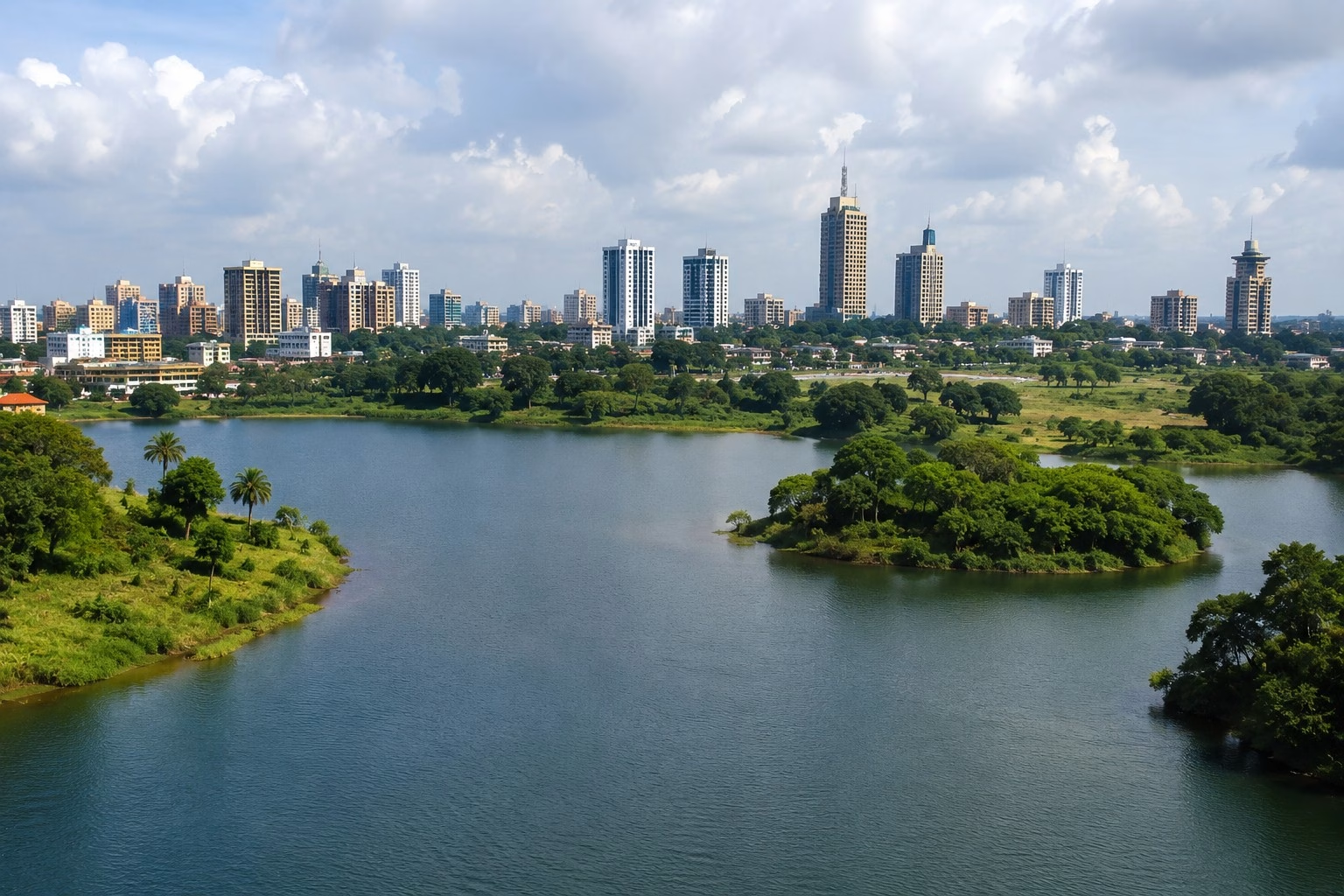
Why The Future of Water in Africa Matters More Than Ever
Africa is experiencing one of the fastest population growth rates in the world. According to United Nations projections, the continent’s population is expected to approach 2.5 billion people by 2050. At the same time, urban areas are expanding rapidly as people move to cities in search of economic opportunities, education, and improved living standards.
This growth is creating unprecedented demand for water. Every new household, school, hospital, business, and industrial facility increases pressure on existing water systems. Yet many cities are already struggling to provide reliable water services to current residents.
In Nairobi, periodic water rationing remains a reality for many households. Lagos continues to face challenges related to infrastructure and water access as its population expands. Cairo depends heavily on the Nile River, while growing urban centers across Sub-Saharan Africa are facing increasing competition for limited water resources.
The challenge is not simply producing more water. The challenge is ensuring that water remains accessible, affordable, safe, and sustainable. This is why The Future of Water in Africa has become one of the most important development conversations of the twenty-first century.
How Rapid Urban Growth Is Reshaping The Future of Water in Africa
African cities are growing faster than water infrastructure can often keep pace. New neighborhoods emerge every year, informal settlements expand, and demand for public services increases dramatically.
Urban growth affects water systems in several ways:
- More households require reliable water supplies.
- Industries consume larger volumes of water.
- Sanitation systems become strained.
- Water distribution networks become overloaded.
- Demand often exceeds available supply.
In Nairobi, growing residential developments have increased pressure on municipal water systems, leading many households and institutions to rely on private boreholes. In Lagos, one of Africa’s largest cities, population growth continues to challenge efforts to expand water infrastructure. Similar trends can be observed in Kinshasa, Dar es Salaam, and Addis Ababa.
Without significant investment in infrastructure, rapid urbanization could become one of the defining threats to The Future of Water in Africa.
Climate Change Is Redefining The Future of Water in Africa
Climate change is fundamentally altering water availability across Africa. Rising temperatures, changing rainfall patterns, prolonged droughts, and more intense floods are creating new challenges for water management.
In the Horn of Africa, repeated droughts have affected millions of people and placed enormous pressure on water resources. In Kenya, communities have experienced cycles of severe drought followed by destructive flooding, highlighting the growing unpredictability of weather patterns.
Meanwhile, cities such as Durban in South Africa have experienced severe flood events that damaged infrastructure and disrupted essential services. Flooding not only affects water quantity but can also contaminate water supplies and increase public health risks.
The relationship between climate change and water security is becoming increasingly clear. As environmental conditions become less predictable, The Future of Water in Africa will depend heavily on how effectively cities and governments adapt to climate-related risks.
Learn more in our article on Climate Change and Urban Water Systems in Africa: 7 Urgent Threats Reshaping the Future of African Cities.
Can Groundwater Sustain Africa’s Growing Cities?
Groundwater has become one of Africa’s most valuable water resources. Stored underground in aquifers, groundwater provides a critical source of water for households, industries, agriculture, and public institutions.
In many cities, groundwater acts as a safety net when municipal water systems cannot meet demand. Nairobi, Kiambu, Kajiado, and Addis Ababa increasingly rely on boreholes to supplement existing water supplies.
However, growing dependence on underground water raises important questions about sustainability. If groundwater is extracted faster than it can naturally recharge, cities may face declining water levels, higher pumping costs, and long-term water insecurity.
Groundwater remains a vital component of The Future of Water in Africa, but it cannot be viewed as an unlimited resource. Sustainable groundwater management will be essential for ensuring future water resilience.
Read our related article: Groundwater Depletion in Africa: What Happens When Groundwater Runs Out?
The Growing Threat of Water Pollution
Water availability is only part of the challenge. Water quality is becoming an equally important issue across Africa.
Rapid urbanization, industrial development, poor waste management, and inadequate sanitation systems continue to affect rivers, lakes, and groundwater resources. In many urban areas, pollution reduces the amount of water that is safe for human use.
The Nairobi River has long faced pollution challenges associated with urban growth and waste disposal. Similar concerns exist in other major cities where industrial discharge and untreated wastewater affect water quality.
Water pollution creates additional pressure on already limited resources because contaminated water often requires costly treatment before it can be used safely. In some cases, pollution can render important water sources unusable.
Protecting water quality will therefore play a major role in determining The Future of Water in Africa and the long-term health of growing cities.
Technology and Innovation Are Changing The Future of Water in Africa
Despite the challenges, innovation is creating new opportunities to strengthen water security across the continent.
Modern technologies are helping researchers, governments, and water managers understand water systems more accurately than ever before.
Important innovations include:
Geographic Information Systems (GIS)
GIS technology helps map water resources, monitor infrastructure, identify vulnerable areas, and support planning decisions.
Satellite Monitoring
Satellite data allows scientists to track droughts, floods, environmental change, and water availability across large geographic areas.
Artificial Intelligence
AI is increasingly being used to analyze environmental data, improve forecasting models, and identify emerging risks.
Smart Water Systems
Digital monitoring tools can detect leaks, monitor water usage, and improve efficiency in urban distribution networks.
Groundwater Mapping
Advanced mapping technologies help hydrogeologists identify aquifers and manage groundwater resources more sustainably.
These innovations demonstrate how science and technology are shaping The Future of Water in Africa and helping cities become more resilient to environmental challenges.
Explore our article on Geoscience Innovation in Africa: The Powerful Future of Research and Climate Resilience
What African Cities Must Do to Secure Future Water Supplies
The future is not predetermined. African cities still have significant opportunities to strengthen water security and improve resilience.
Key priorities include:
- Investing in modern water infrastructure
- Expanding wastewater treatment systems
- Protecting groundwater recharge areas
- Promoting rainwater harvesting
- Strengthening environmental monitoring
- Improving governance and regulation
- Supporting climate adaptation planning
- Encouraging sustainable water use practices
Many successful initiatives already demonstrate what is possible when governments, researchers, communities, and development partners work together.
The challenge now is scaling these solutions to meet the needs of rapidly growing populations.
The future of water in Africa will not be determined solely by rainfall or natural resources. It will be shaped by how effectively cities manage growth, protect water systems, invest in innovation, and prepare for a changing climate.
For additional insights on global water security and sustainable water management, visit UN-Water.
A Defining Moment for Africa’s Water Future
Water is no longer just an environmental issue. It is a development issue, an economic issue, a public health issue, and a climate resilience issue.
The decisions made today will determine whether future generations inherit resilient water systems or face increasing scarcity and uncertainty. Governments, researchers, urban planners, businesses, and communities all have a role to play in shaping sustainable outcomes.
The stakes are particularly high because water affects nearly every aspect of daily life—from food production and economic growth to public health and environmental sustainability.
Ultimately, The Future of Water in Africa will depend not only on the resources available but also on how effectively those resources are managed. The cities that invest in resilience, innovation, infrastructure, and sustainable planning today will be better positioned to thrive tomorrow.
The future of African cities will depend not only on the buildings they construct or the populations they accommodate, but also on their ability to secure one of humanity’s most essential resources. The decisions made today about water management, infrastructure, and resilience will shape The Future of Water in Africa for generations to come.