

Urban water security risks are becoming one of the most urgent development challenges facing Kenyan cities today. As urban populations continue to grow rapidly, pressure on already fragile water systems is increasing across major urban centers such as Nairobi, Mombasa, Kisumu, and Nakuru.
Water insecurity in urban areas is no longer only about shortages. It is increasingly connected to infrastructure failure, flooding, groundwater depletion, contamination, climate variability, and unequal access to safe water. In many parts of Nairobi, residents experience water rationing for days, while others rely on informal water vendors whose prices are often significantly higher than regulated supply systems.
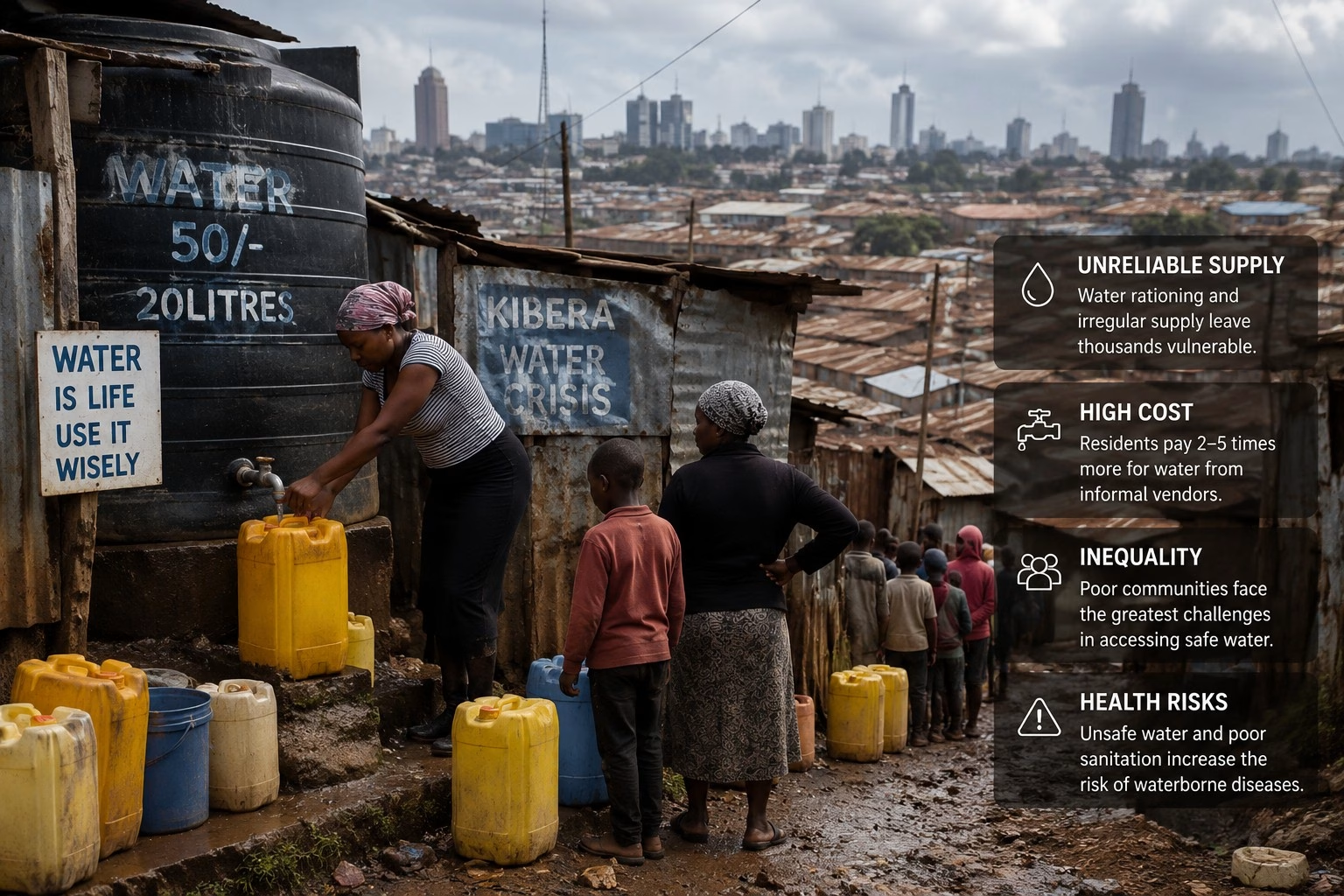
The challenge is particularly severe in densely populated informal settlements where water access remains unreliable despite growing demand. Areas such as Kibera, Mathare, and Mukuru continue to face recurring water stress, poor sanitation, and flood-related contamination, exposing residents to multiple interconnected risks.
Understanding urban water security risks requires looking beyond water availability alone. It involves examining how infrastructure, governance, urban planning, climate change, and socio-economic inequality interact to shape water access and resilience in rapidly growing cities.
Understanding What Urban Water Security Really Means
Urban water security is often misunderstood as simply having enough water supply. In reality, it is a broader concept that includes reliability, accessibility, affordability, quality, and resilience.
A city may technically have water sources available, yet large portions of the population may still struggle to access safe and affordable water consistently. This is one of the defining characteristics of urban water security risks in Kenya. The issue is not only whether water exists, but whether urban systems can distribute and protect it effectively.
Water security in cities depends on several interconnected factors. Infrastructure must function efficiently, governance systems must regulate access fairly, and urban planning must anticipate future demand. At the same time, water quality must be protected from contamination caused by flooding, waste disposal, and failing sanitation systems.
In cities where these systems are weak or fragmented, water insecurity becomes more severe over time.
Rapid Urbanization Is Outpacing Water Infrastructure
Kenya’s urban population has expanded rapidly over the last two decades. Nairobi alone continues to grow as more people move into the city in search of employment, education, and economic opportunity. However, water infrastructure development has not expanded at the same pace.
This mismatch between population growth and infrastructure capacity is intensifying urban water security risks across many urban areas. Existing pipelines, treatment systems, and distribution networks are struggling to serve growing populations, particularly in low-income neighborhoods.
In several parts of Eastlands and Rongai, residents frequently experience inconsistent water supply and prolonged rationing. Many households have adapted by storing water in containers or purchasing it from private vendors, creating additional financial pressure.
The rapid growth of informal settlements has made the situation even more complex. In many cases, settlements expand faster than government infrastructure planning, leaving communities dependent on temporary or unregulated water systems.
Without major investment in urban infrastructure, the gap between water demand and supply is likely to continue widening.
Informal Settlements Face the Highest Water Security Risks
The effects of urban water security risks are often felt most severely in informal settlements. Communities such as Kibera, Mathare, and Mukuru face a combination of water shortages, poor sanitation, flooding, and contamination that creates persistent public health and environmental challenges.
Many households in these areas rely on communal water points, informal vendors, or temporary piping systems that are vulnerable to leakages and contamination. During periods of water rationing, access becomes even more limited, forcing residents to pay higher prices for smaller amounts of water.
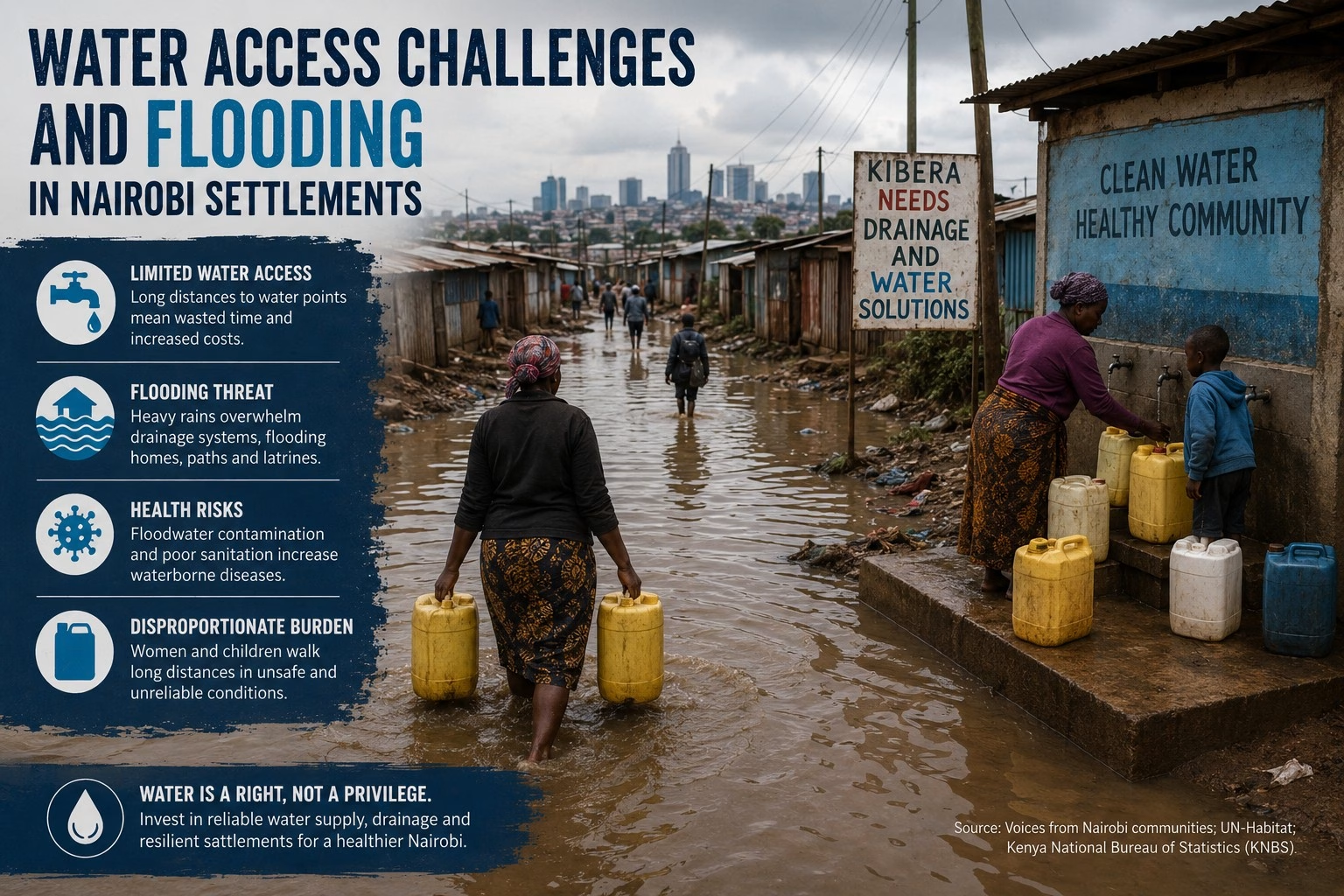
Flooding further increases vulnerability. In Mathare and parts of Mukuru, heavy rainfall frequently overwhelms drainage systems, mixing floodwater with sewage and contaminating water sources. This creates ideal conditions for the spread of waterborne diseases such as cholera and typhoid.
These realities demonstrate that urban water security risks are deeply connected to inequality. Access to safe water is often determined not only by geography, but also by income, infrastructure coverage, and political attention.
Climate Change Is Intensifying Urban Water Insecurity
Climate change is increasingly reshaping water security across Kenyan cities. Longer drought periods are reducing water availability, while intense rainfall events are increasing flooding and contamination risks.
Nairobi has experienced repeated cycles of drought and heavy flooding over recent years, exposing weaknesses within urban water systems. During dry periods, reservoirs and rivers that support urban supply decline significantly, increasing dependence on rationing and groundwater extraction.
At the same time, flood events damage infrastructure, overwhelm drainage systems, and contaminate water sources. In densely populated areas with inadequate drainage, even short periods of heavy rainfall can disrupt water access and sanitation systems.
Climate resilience strategies are becoming increasingly important as water insecurity continues to worsen across African cities.
These climate pressures are making urban water security risks more unpredictable and more difficult to manage using traditional infrastructure approaches alone.
Groundwater Dependence Is Increasing Across Nairobi
As surface water systems struggle to meet demand, groundwater is becoming an increasingly important urban water source. Across Nairobi, many residential estates, businesses, schools, and institutions now rely heavily on boreholes.
This growing dependence reflects both adaptation and vulnerability. Groundwater provides an alternative during periods of rationing, yet excessive extraction can place long-term pressure on aquifers.
In areas such as Rongai and parts of Eastlands, borehole development has expanded rapidly over the years. However, concerns are also increasing regarding groundwater quality, sustainability, and unequal access.
Communities with financial resources are often able to secure private boreholes, while lower-income communities remain dependent on unreliable supply systems. This creates another layer of inequality within urban water access.
Understanding groundwater management is therefore essential when evaluating urban water security risks in rapidly growing cities.
Water Governance and Inequality Continue to Shape Urban Risk
Governance plays a central role in determining how water is distributed, managed, and protected within urban environments. In many Kenyan cities, governance challenges continue to weaken water resilience. Professionals working in sustainability and urban resilience must also understand how to position themselves to influence systems and policy decisions effectively.
Issues such as aging infrastructure, illegal connections, limited maintenance, and unequal service delivery contribute to ongoing insecurity. In some areas, informal water markets have emerged where vendors sell water at prices far higher than official rates.
This means that lower-income households often pay more for water than wealthier residents connected to regulated systems. Such inequalities reveal that urban water security risks are not only technical challenges, but also social and governance challenges.
Improving resilience therefore requires stronger regulation, better urban planning, and more inclusive infrastructure development.
How Urban Water Security Risks Can Be Evaluated
Evaluating urban water security risks requires a multidimensional approach. Water security cannot be measured through supply alone because vulnerability is influenced by infrastructure, environmental conditions, governance systems, and social inequality.
Several indicators can help assess urban water security. These include the reliability of water supply, infrastructure coverage, affordability, water quality, flood exposure, groundwater dependence, and the effectiveness of governance systems.
Research published through platforms such as MDPI continues to highlight the growing importance of integrated urban water security assessments in rapidly expanding cities.
Areas with frequent rationing, limited drainage, poor sanitation, or high dependence on informal supply systems are often more vulnerable to disruption. Informal settlements tend to face multiple overlapping risks simultaneously, making them priority areas for intervention.
Risk evaluation also requires understanding future pressures. Population growth, climate variability, and urban expansion all influence how water insecurity may evolve over time.
Building Water-Resilient Cities in Kenya
Addressing urban water security risks will require more than temporary solutions. Kenyan cities need integrated strategies that combine infrastructure investment, climate resilience, environmental protection, and inclusive urban planning.
Rainwater harvesting systems, decentralized water supply models, and smart monitoring technologies are becoming increasingly important in urban resilience planning. Community-based systems are also helping improve access in underserved areas.
In settlements such as Mukuru and Kibera, innovations including water ATM systems and local water distribution initiatives have demonstrated how targeted solutions can improve access for vulnerable communities.
At the same time, stronger governance frameworks will be essential. Urban resilience depends not only on physical infrastructure, but also on effective institutions capable of long-term planning and equitable service delivery.
Strategic Outlook on Urban Water Security Risks
Urban water security risks are becoming one of the defining challenges of urban development in Kenya. As cities continue to expand, the pressure on water systems will intensify unless resilience becomes central to planning and governance.
The future of Kenyan cities will depend heavily on how effectively they manage water access, infrastructure, groundwater resources, and climate adaptation simultaneously. Water security is no longer only an environmental issue. It is increasingly a public health issue, a governance issue, an economic issue, and a question of urban sustainability.
Building resilient cities will require coordinated action across science, policy, infrastructure, and community engagement. Without long-term investment and strategic planning, urban water insecurity is likely to deepen as climate pressures and urban growth continue to accelerate.

Comments are closed.