

A Growing Crisis That Can No Longer Be Ignored
Water shortages in Africa are no longer a distant or abstract concern. They are a daily reality affecting hundreds of millions of people across the continent. Today, more than 400 million people still lack access to safe drinking water, a figure that continues to rise as environmental pressures and population demands intensify.
From the dry landscapes of the Horn of Africa to rapidly expanding urban centers, the strain on water systems is becoming more visible and more severe. What makes this crisis particularly complex is not just the lack of water, but the way multiple factors interact over time, making recovery increasingly difficult.
Understanding water shortages in Africa requires looking beyond a single cause. It is a layered issue shaped by climate, population dynamics, infrastructure, governance, and environmental change.
Climate Change Is Reshaping Water Availability Across Africa
One of the most significant drivers of water shortages in Africa is climate variability. Across the continent, weather patterns are becoming more unpredictable, and extreme events are more frequent.
In regions such as Kenya and Somalia, prolonged droughts have led to the drying up of rivers, boreholes, and seasonal water sources. In some areas, reports indicate that a large proportion of water points have become unreliable during extended dry periods.
At the same time, heavy rainfall and flooding create a different kind of disruption. Infrastructure is damaged, water sources become contaminated, and communities are left without safe options.
This creates a difficult cycle where water is either scarce or unsafe, both of which contribute to the worsening of water shortages in Africa.
Population Growth Is Increasing Pressure on Limited Water Resources
Africa’s population is growing rapidly, and this growth is placing unprecedented pressure on water systems. As more people require access to water for drinking, sanitation, agriculture, and industry, existing supply systems are struggling to keep up.
Urban areas are particularly affected. Cities are expanding faster than infrastructure can be developed, leading to informal settlements where access to clean water is limited or inconsistent.
Understanding water shortages in Africa also means recognizing that demand is increasing faster than supply, creating a widening gap that is difficult to close without significant investment and planning.
Weak Infrastructure Continues to Limit Water Access
Infrastructure plays a central role in determining who has access to water and who does not. Across many regions, water systems are either underdeveloped, outdated, or unable to serve growing populations.
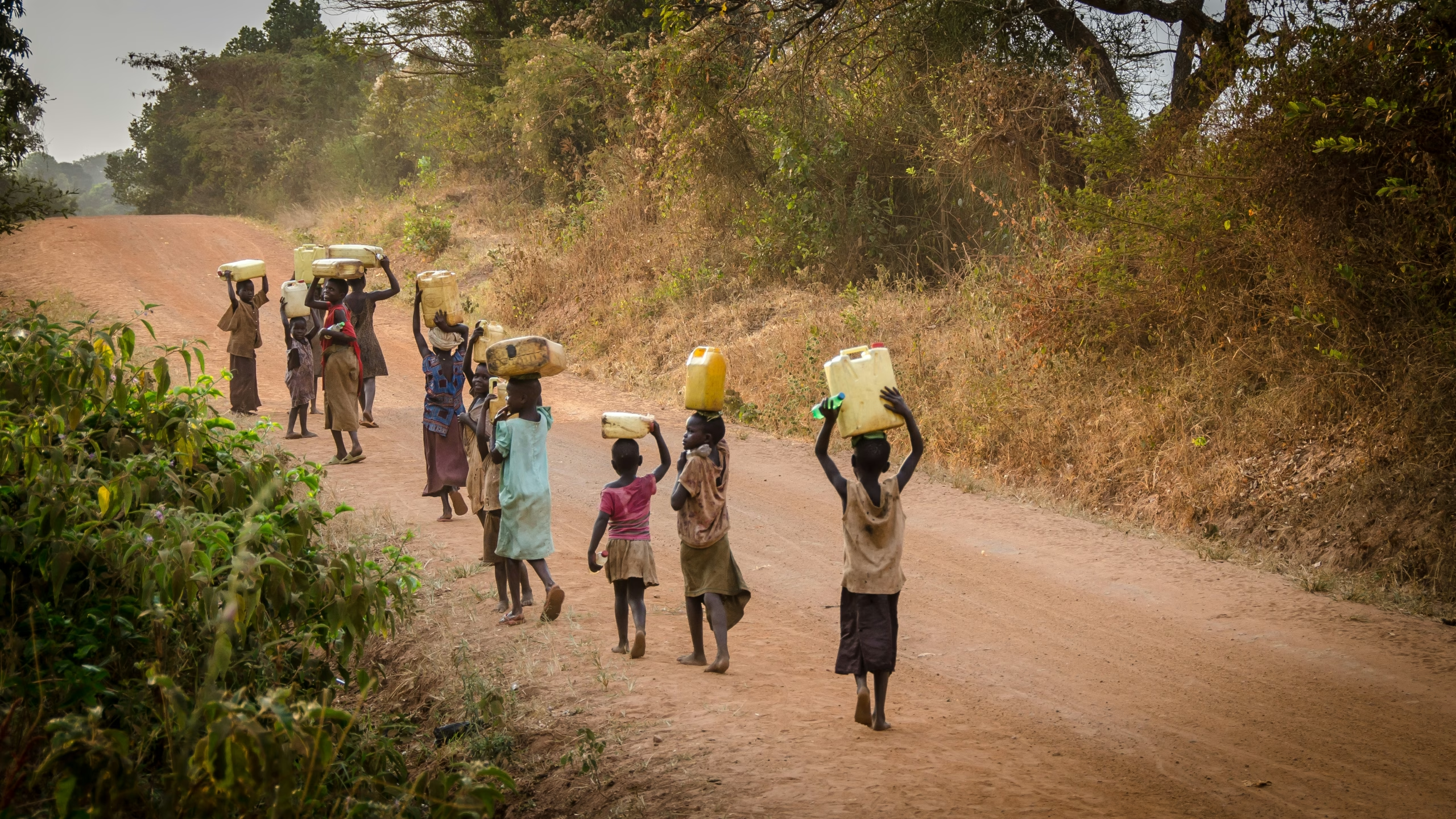
Millions of people still rely on distant or unsafe water sources, particularly in rural areas. In urban environments, even where systems exist, they are often overwhelmed by demand.
Cities such as Lagos and Cairo illustrate this challenge, where rapid expansion has outpaced the capacity of water networks, leaving many residents without reliable access.
As a result, water shortages in Africa are not only about natural scarcity but also about the ability to deliver water effectively.
Governance Challenges Are Weakening Water Systems
Effective management is essential for sustainable water access, yet governance remains a major challenge in many parts of the continent.
Issues such as weak regulation, limited investment, and poor planning contribute to inefficiencies in water systems. In some cases, infrastructure exists but is not properly maintained or managed, reducing its effectiveness over time.
Without strong governance frameworks, it becomes difficult to allocate resources, monitor usage, and ensure long-term sustainability. This makes water shortages in Africa not just a technical issue, but also an institutional one. Addressing these challenges also requires professionals who are well-positioned to influence systems and decisions.
Environmental Degradation Is Reducing Natural Water Sources
Human activities are increasingly affecting the ecosystems that support water availability. Deforestation, unsustainable land use, and environmental degradation are disrupting natural water cycles.
Forests and wetlands play a critical role in retaining water and maintaining balance within ecosystems. When these systems are damaged, water availability becomes less predictable and more limited.
Regions such as the Congo Basin are beginning to experience the effects of these changes, highlighting how environmental damage contributes directly to water shortages in Africa.
Water Contamination Is Turning Scarcity into a Health Crisis
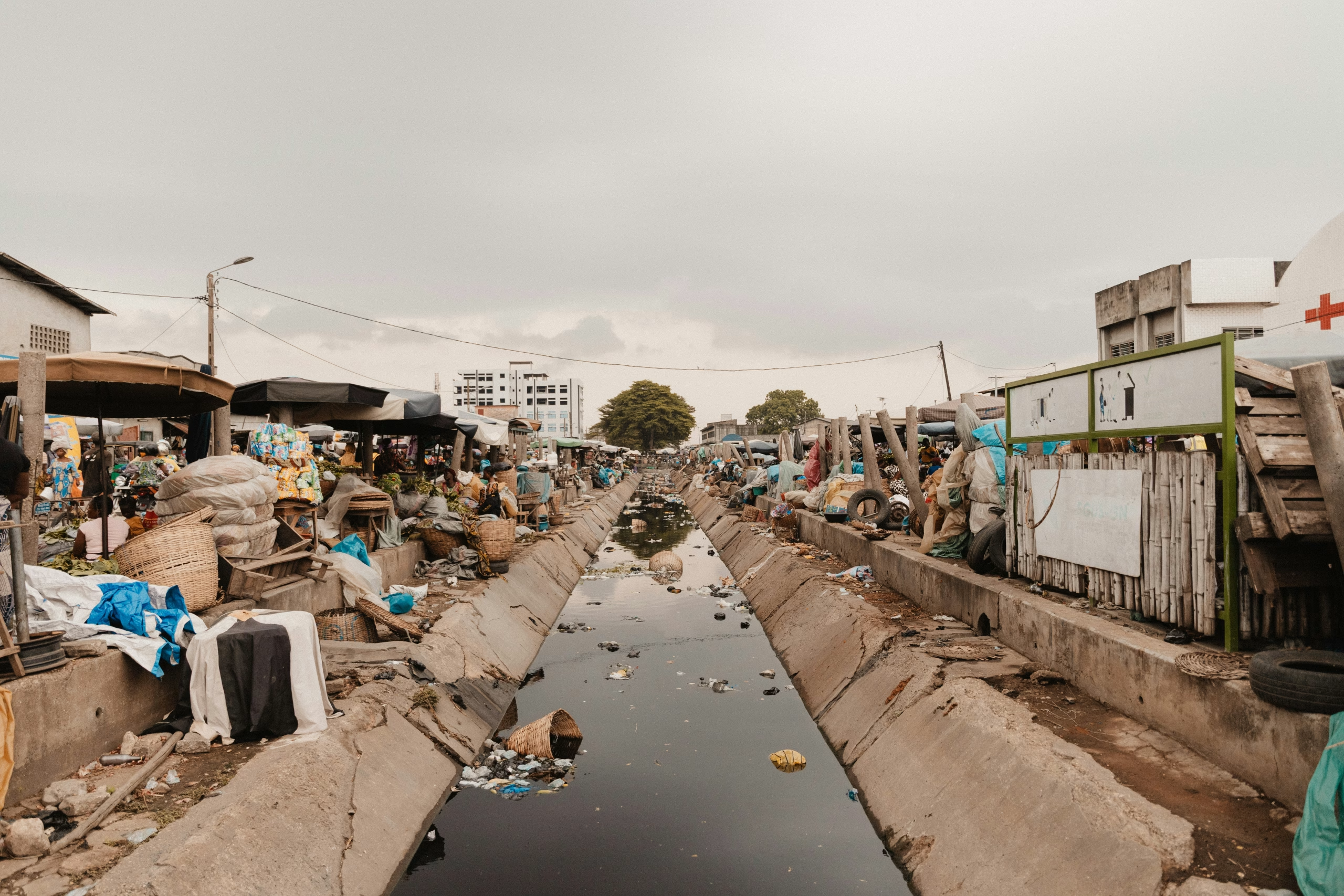
The issue of water shortages in Africa is not only about availability but also about safety. Even where water exists, it is often unsafe for consumption.
Contaminated water contributes to widespread health challenges, particularly among vulnerable populations. Waterborne diseases such as cholera continue to affect communities, while flooding events often worsen contamination levels.
This means that access to water does not always translate to access to safe water, further complicating the crisis.
Conflict and Instability Are Disrupting Water Access
In several regions, conflict plays a significant role in shaping water availability. Infrastructure may be damaged or destroyed, maintenance becomes difficult, and access to resources becomes uneven.
Areas such as South Sudan and regions linked to the Nile Basin demonstrate how water scarcity and conflict can influence each other. In some cases, limited access to water can intensify tensions, while instability can further restrict access.
This dynamic makes water shortages in Africa both a consequence and a contributing factor to broader socio-political challenges.
Regional Hotspots of Water Shortages in Africa
While the crisis is widespread, certain regions are more severely affected.
The Horn of Africa, including Somalia, Kenya, and Ethiopia, continues to experience extreme drought conditions. The Sahel region faces recurring water stress, while Sub-Saharan Africa accounts for a significant share of global gaps in access to safe water and sanitation.
These regional patterns highlight the uneven distribution of water shortages in Africa, emphasizing the need for targeted solutions.
Addressing Water Shortages in Africa Through Sustainable Solutions
Efforts to address water shortages in Africa are already underway, but scaling these solutions remains critical.
Investment in infrastructure is essential, including innovations such as solar-powered water systems and improved distribution networks. Initiatives led by organizations like World Bank are supporting water access programs across multiple countries.
Local solutions, including rainwater harvesting and community-based systems, are also proving effective in improving access. Strengthening governance, improving planning, and ensuring sustainable management will be key to long-term progress.
Strategic Outlook on Water Shortages in Africa
Water shortages in Africa are the result of interconnected environmental, social, and institutional pressures. No single solution can address the problem in isolation.
As climate risks intensify and population growth continues, the focus must shift toward integrated approaches that combine infrastructure development, environmental protection, and effective governance.
The future of water security in Africa will depend on how well these elements are aligned. Addressing the crisis is not only about increasing supply, but about creating systems that are resilient, sustainable, and capable of supporting long-term development.

Comments are closed.