
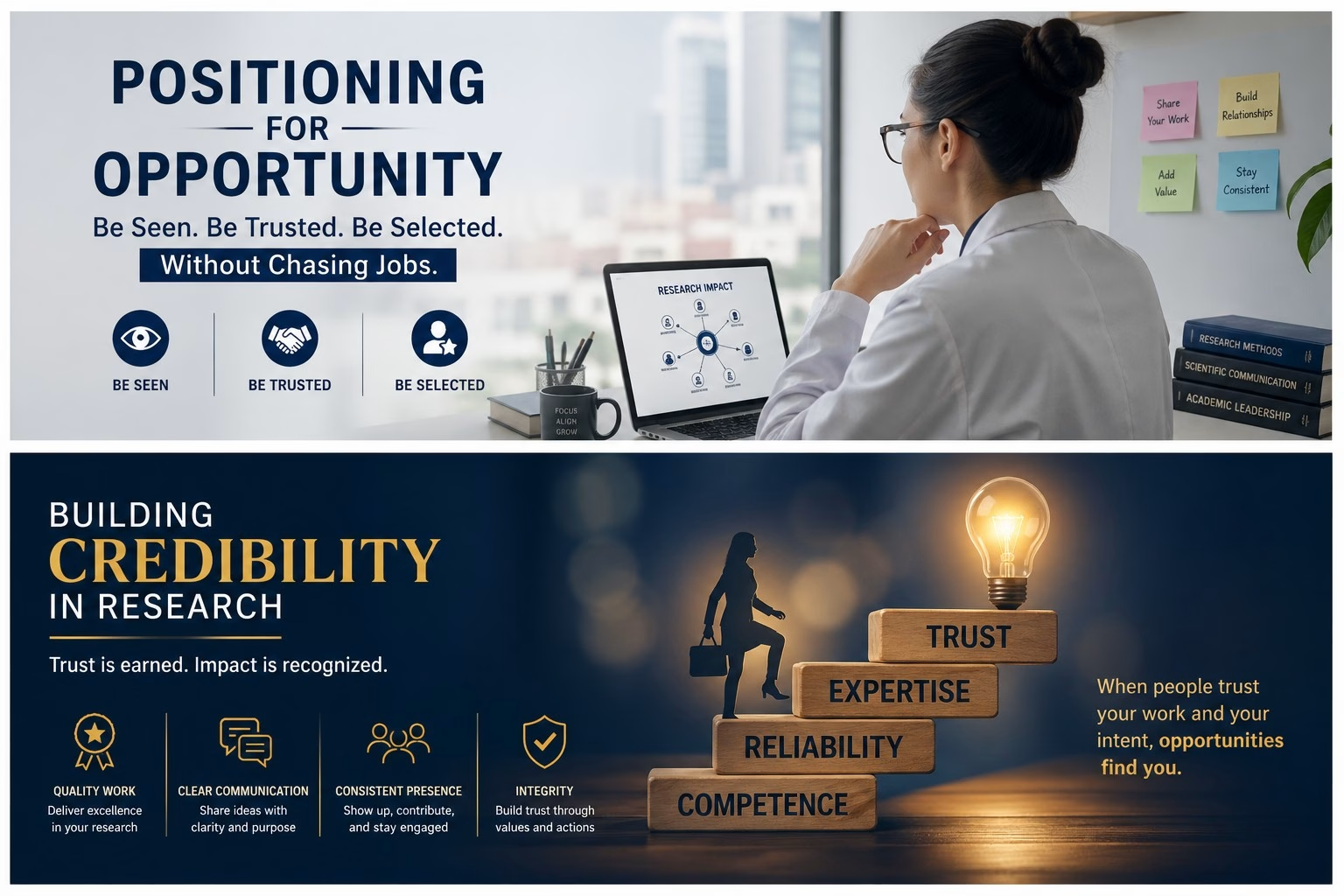
Positioning for opportunity is often misunderstood. Many early-career researchers believe that opportunities come from applying to as many roles as possible, sending endless emails, and constantly searching for openings. Yet, those who consistently secure the best opportunities rarely rely on chasing. Instead, they focus on becoming visible, credible, and trusted within their field.
Understanding how to get research opportunities is not just about effort, it is about alignment. When your work, presence, and reputation are positioned correctly, opportunities begin to find you. This shift from chasing to attracting is what separates those who struggle from those who progress with clarity and momentum.
Rethinking Opportunity in Research Careers
Opportunities in research are often perceived as scarce and highly competitive. This belief pushes many researchers into a cycle of constant application and rejection. However, the reality is more nuanced. Opportunities are not always hidden; they are often given to individuals who are already visible, engaged, and trusted within their professional environment.
Positioning for opportunity requires a shift in mindset. Instead of asking, “Where can I apply?” the more strategic question becomes, “How can I become someone worth selecting?” This shift changes how you approach your work, your visibility, and your professional relationships.
Visibility: Becoming Known for the Right Things
Visibility is not about being everywhere; it is about being known for something meaningful. Many researchers remain unnoticed, not because they lack ability, but because their work is not consistently visible to the right audience.
To understand how to get research opportunities, you must recognize that people can only select what they can see. Visibility involves sharing your work, engaging in discussions, and contributing to your field in ways that highlight your expertise.
To secure research opportunities, it’s essential to realize that individuals can only choose from what is visible to them. Enhancing visibility means showcasing your work, participating in conversations, and actively contributing to your discipline to demonstrate your expertise. Effective communication is crucial for increasing visibility. For more insights, refer to our guide on science communication.
This could mean publishing insights, participating in academic conversations, or presenting your work more intentionally. Over time, consistent visibility builds recognition, and recognition creates familiarity. Familiarity is often the first step toward opportunity.
Credibility: Building Trust Through Your Work
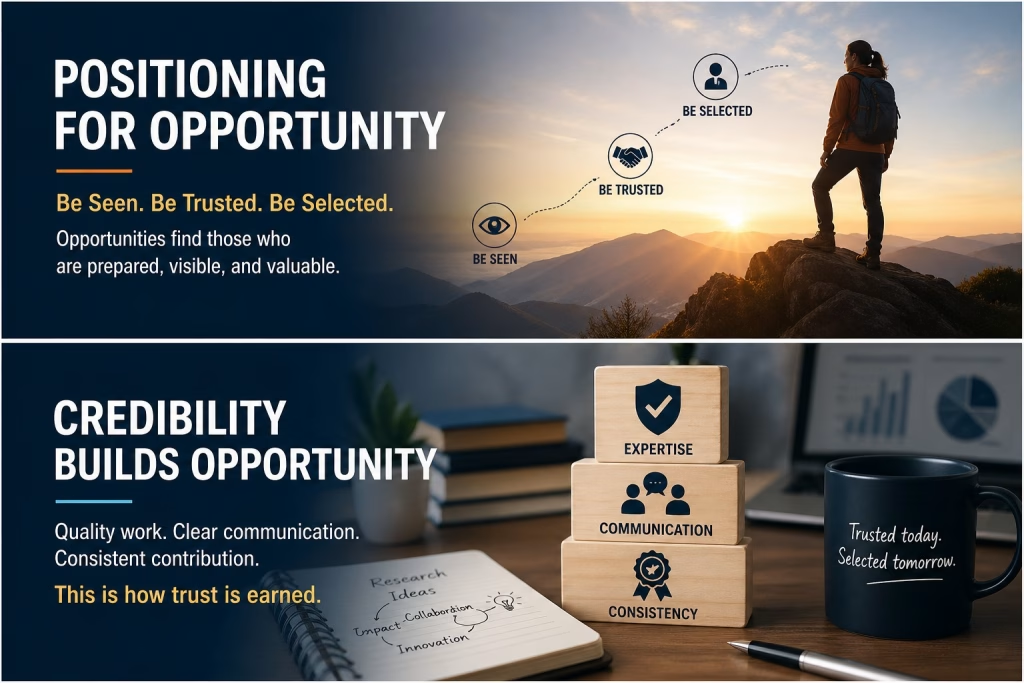
Being seen is important, but it is not enough. Visibility without credibility does not lead to meaningful opportunities. People need to trust not only that you exist, but that you can deliver value.
Positioning for opportunity involves demonstrating competence through your work. This includes the quality of your research, the clarity of your communication, and the consistency of your contributions.
Building credibility takes time. It is evident in your work ethic, the way you communicate your ideas, and how others perceive your professionalism. As time passes, credibility turns visibility into trust, and trust ultimately impacts decision-making.
Alignment: Connecting Your Work to Real Needs
One of the most overlooked aspects of positioning for opportunity is alignment. Many researchers focus on what they want, without considering what is needed. Opportunities are often created at the intersection of your skills and existing problems.
Understanding how to get research opportunities requires awareness of your field. What challenges exist? What gaps need to be filled? Where can your expertise contribute meaningfully?
By actively seeking feedback from peers and industry leaders, you can refine your approach and ensure your work remains aligned with current demands. Engaging in collaborative projects can also enhance visibility and demonstrate your commitment to addressing pressing issues. Networking within your field will provide insights into emerging trends and areas ripe for exploration. Ultimately, by positioning yourself as a solution provider, you increase your potential for impactful contributions and long-term success.
When your work aligns with real needs, it becomes relevant. And relevance increases your chances of being noticed, trusted, and selected.
Relationships: The Hidden Layer of Opportunity
Opportunities rarely exist in isolation; they move through people. Relationships play a significant role in how opportunities are shared, recommended, and assigned.
This does not mean networking in a superficial sense. Instead, it involves building genuine professional connections, engaging thoughtfully, and contributing to conversations within your field.
Positioning for opportunity includes being present in the right spaces, interacting with intention, and creating value in your interactions. Over time, these relationships become pathways through which opportunities flow.
Consistency: Turning Effort into Recognition
One of the biggest mistakes researchers make is inconsistency. They show up occasionally, share their work sporadically, and expect results immediately. However, recognition is built through repeated exposure.
Consistency in your work, communication, and presence reinforces your positioning. It signals reliability and commitment, both of which are essential for trust.
When people repeatedly encounter your work and contributions, you move from being unknown to being recognized. Recognition is what makes selection easier.
The Shift from Chasing to Attracting Opportunities
At a certain point, the focus shifts. Instead of constantly searching for openings, your efforts begin to create visibility, trust, and alignment. This is when opportunities start to appear without direct pursuit.
Understanding how to get research opportunities becomes less about searching and more about becoming. You are no longer trying to fit into opportunities; you are positioning yourself so that opportunities fit you.
Perspectives from sources like Harvard Business Review highlight the significance of visibility, credibility, and strategic positioning for advancing one’s career.
This shift does not happen instantly, but it is a natural result of intentional positioning over time.
Where Opportunity Begins
Opportunity does not begin with an application; it begins with how you are positioned. When your work is visible, your credibility is established, and your presence is consistent, you become someone others think of when opportunities arise.
Building a network of genuine relationships enhances your visibility and attracts the right opportunities. Engaging with others in your field allows for mutual support and collaboration. By sharing your insights and expertise, you position yourself as a valuable resource. As your reputation grows, so does the likelihood of being approached for unique projects and partnerships. This proactive approach fosters a cycle in which opportunities continually find you, rather than the other way around.
Positioning for opportunity is not about doing more, but about doing the right things with intention. It is about shifting from chasing outcomes to building a foundation that naturally attracts them.
If you are intentional about how you show up, communicate, and contribute, you will find that opportunities begin to move toward you in ways that feel aligned, sustainable, and earned.
If you are serious about growing as a researcher and want structured guidance on how to be seen, trusted, and selected, mentorship can help you move with clarity and direction. Apply for Free Mentorship. Take the first step toward positioning yourself for the opportunities you want.

Comments are closed.