
Women in science leadership in Africa are becoming increasingly important in shaping the continent’s future. Across Africa, scientific research and innovation are playing a critical role in addressing some of the region’s most urgent challenges, including climate change, food insecurity, public health crises, water scarcity, and technological transformation.
As these challenges become more complex, the need for inclusive leadership in science has become more evident. Diverse scientific leadership strengthens decision-making, broadens perspectives, and encourages more inclusive solutions to development problems. Yet despite growing progress in education and professional participation, women remain underrepresented in many scientific leadership spaces across the continent.
The conversation is no longer only about participation in science. It is increasingly about influence, visibility, decision-making, and leadership. Expanding opportunities for women in science leadership in Africa is therefore not simply a gender issue; it is a development issue closely connected to innovation, sustainability, and long-term progress.
Progress Is Visible, but Major Gaps Still Exist
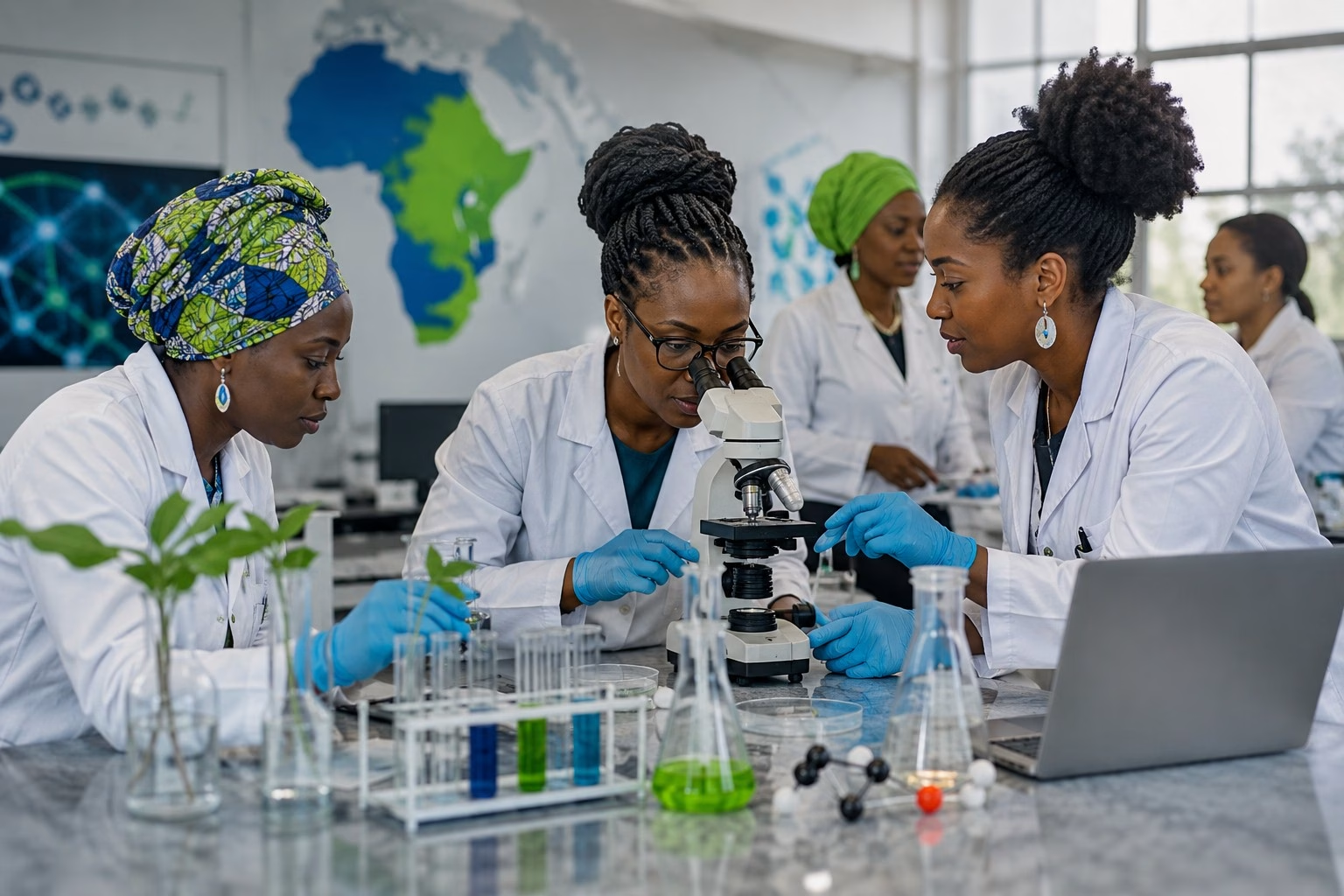
Over the past two decades, Africa has seen encouraging progress in the number of women entering science-related fields. More women are pursuing university education, participating in research, and contributing to scientific innovation across sectors such as health, environmental science, engineering, and technology.
However, leadership gaps remain significant. While women may enter scientific fields in growing numbers, far fewer advance into senior research, institutional leadership, policy, or decision-making positions. Across many universities and research institutions, leadership structures continue to be dominated by men.
Funding disparities also continue to affect career progression. Female researchers often face more barriers in accessing grants, publishing research, and building professional networks. These inequalities can slow career growth and reduce visibility within scientific communities.
As a result, women in science leadership in Africa continue to face structural limitations that go beyond education alone.
Cultural and Structural Barriers Continue to Shape Scientific Careers
The barriers facing women in science are often deeply interconnected. In many contexts, cultural expectations still influence how women engage with education, careers, and leadership opportunities.
Family responsibilities, societal stereotypes, and unequal workplace expectations can affect career progression at different stages. Women pursuing scientific careers may also encounter limited mentorship, restricted access to leadership opportunities, or environments where their expertise is undervalued.
In some cases, institutional systems themselves unintentionally reinforce inequality through recruitment patterns, funding distribution, or leadership selection processes. These barriers may not always be openly visible, yet they continue to shape professional outcomes over time.
Understanding women in science leadership in Africa therefore requires examining not only representation, but also the systems and structures that influence career growth.
Mentorship Is Expanding Opportunities for Women in STEM
Mentorship is becoming one of the most powerful tools for strengthening women in science leadership in Africa. Access to experienced mentors can help early-career scientists navigate professional challenges, build confidence, develop leadership skills, and access opportunities that may otherwise remain out of reach.
For many women in STEM fields, mentorship provides more than technical guidance. It creates support systems that encourage resilience, visibility, and long-term professional growth. Mentors can help researchers strengthen communication skills, improve research direction, expand networks, and prepare for leadership roles.
The growing importance of mentorship also highlights the value of representation. Seeing women succeed in scientific leadership positions can inspire younger researchers to pursue similar paths with greater confidence.
Programs that invest in mentorship are therefore contributing not only to individual growth, but also to broader institutional and societal transformation.
Read more in our article on mentorship for early-career researchers.
African Women Scientists Are Already Shaping Global Research
Despite persistent barriers, African women scientists continue to make important contributions across multiple fields. Their work is influencing environmental conservation, public health, climate resilience, agriculture, and scientific innovation both within Africa and globally.
One of the most recognized examples is Professor Wangari Maathai of Kenya, whose environmental leadership and scientific advocacy demonstrated how research, sustainability, and public engagement can create lasting impact. Her work through the Green Belt Movement highlighted the connection between environmental conservation, community empowerment, and policy influence.
Across the continent today, women researchers are contributing to climate science, epidemiology, biotechnology, geoscience, and engineering. Their growing visibility is helping challenge stereotypes while expanding the understanding of what scientific leadership can look like in African contexts.
The rise of women in science leadership in Africa is therefore not a future possibility alone. It is already happening, even though progress remains uneven.

Science Leadership Is About More Than Representation
Representation matters, but leadership in science goes beyond visibility alone. Scientific leaders influence research priorities, shape institutional cultures, contribute to policy discussions, and determine how knowledge is applied within society.
When leadership spaces lack diversity, important perspectives may be excluded from scientific decision-making. Inclusive leadership strengthens innovation by bringing different experiences, priorities, and approaches into research environments.
This is particularly important in Africa, where scientific challenges are often closely connected to local realities, community experiences, and environmental conditions. Expanding women in science leadership in Africa, therefore, contributes not only to fairness but also to the quality and relevance of scientific solutions.
Leadership also creates pathways for future generations. Women in visible scientific positions help normalize inclusion and encourage broader participation across STEM fields.
Why Visibility and Science Communication Matter
Visibility plays a major role in scientific leadership. Researchers whose work is visible and accessible are often more likely to influence discussions, attract opportunities, and contribute to public understanding.
However, many women scientists remain underrepresented in media coverage, conferences, and public engagement platforms. This can limit recognition of their contributions and reduce opportunities for influence.
Science communication is therefore becoming increasingly important. The ability to communicate research clearly allows scientists to engage policymakers, communities, institutions, and wider audiences more effectively.
Strong communication also helps bridge the gap between research and societal impact. As discussions around climate change, public health, and sustainability continue to grow, the visibility of women in science leadership in Africa will remain essential in shaping inclusive scientific conversations.
Explore our article on science communication strategies for researchers.
Building Stronger Systems for Women in Science Leadership in Africa
Strengthening scientific leadership requires long-term institutional support. While individual resilience and mentorship matter, sustainable change depends on systems that create equitable opportunities for growth.
Universities, governments, research institutions, and funding organizations all have important roles to play. Expanding scholarships, supporting mentorship programs, improving workplace policies, and increasing access to leadership opportunities can help create more inclusive scientific environments.
Investment in early-career development is also essential. Supporting women researchers at the beginning of their careers helps strengthen long-term participation and leadership representation.
Organizations such as the African Academy of Sciences continue to support scientific research, leadership development, and innovation across Africa.
Building stronger systems for women in science leadership in Africa is, therefore, closely connected to the future of scientific progress across the continent.
Strategic Outlook on Women in Science Leadership in Africa
The future of Africa’s scientific development will depend heavily on inclusive leadership, diverse perspectives, and equitable access to opportunity. As scientific and environmental challenges continue to evolve, the continent cannot afford to exclude talent, expertise, and innovation from leadership spaces.
Progress is already visible, but long-term transformation will require sustained investment in mentorship, education, institutional reform, and visibility. Expanding opportunities for women in science leadership in Africa is not only about addressing inequality; it is about strengthening the continent’s ability to innovate, solve problems, and shape sustainable futures.
The next generation of African scientific leadership will likely be defined not only by technical expertise but also by inclusivity, collaboration, and the ability to connect science with societal impact.